



Gomma Photography Grant 2025
Strays
Photographer
Hara Ghan
Strays
13 Mar, 2026
We are thrilled to award the Gomma Grant 2025 to Hara Ghan and to introduce what we believe is a powerful new photographic voice.
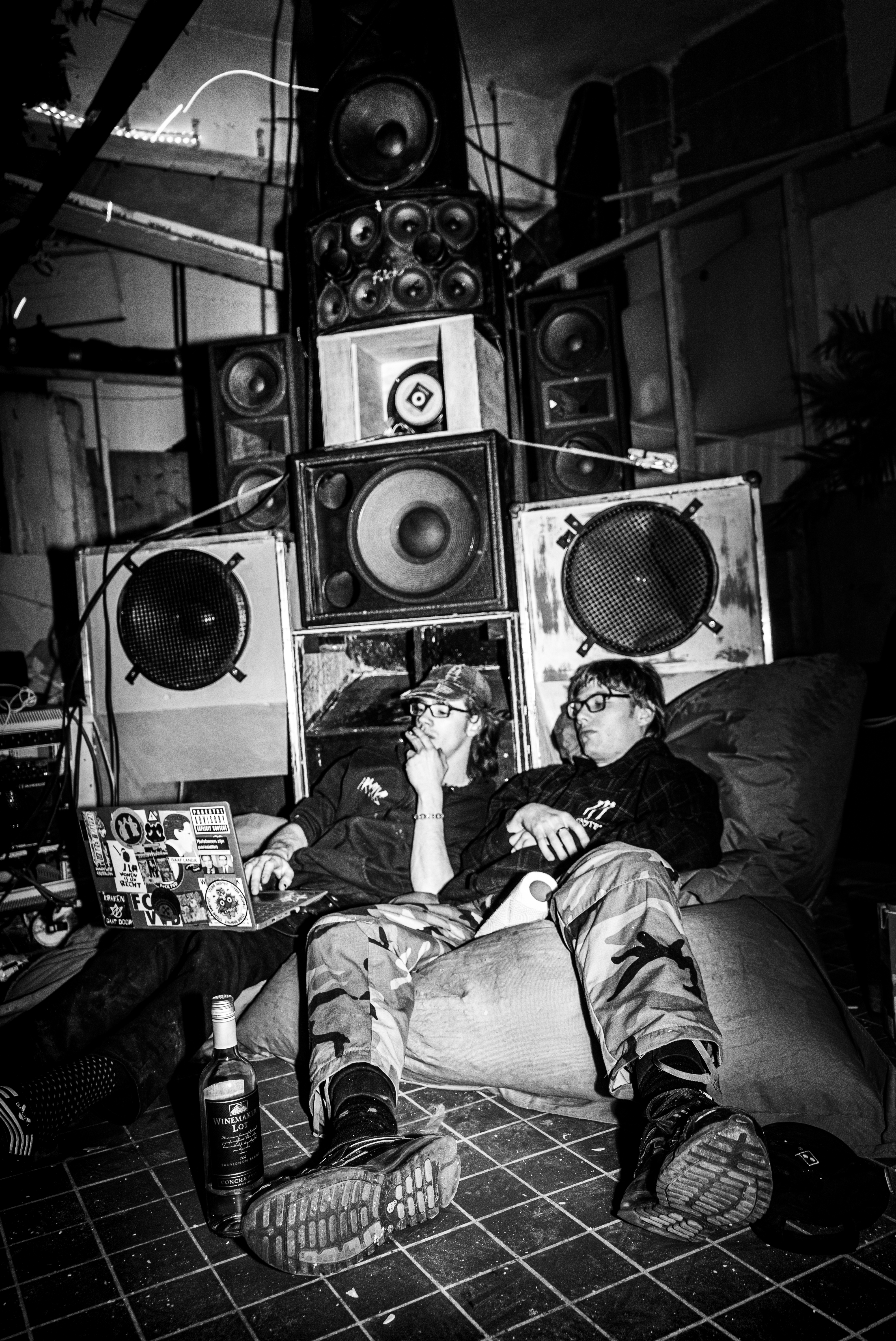
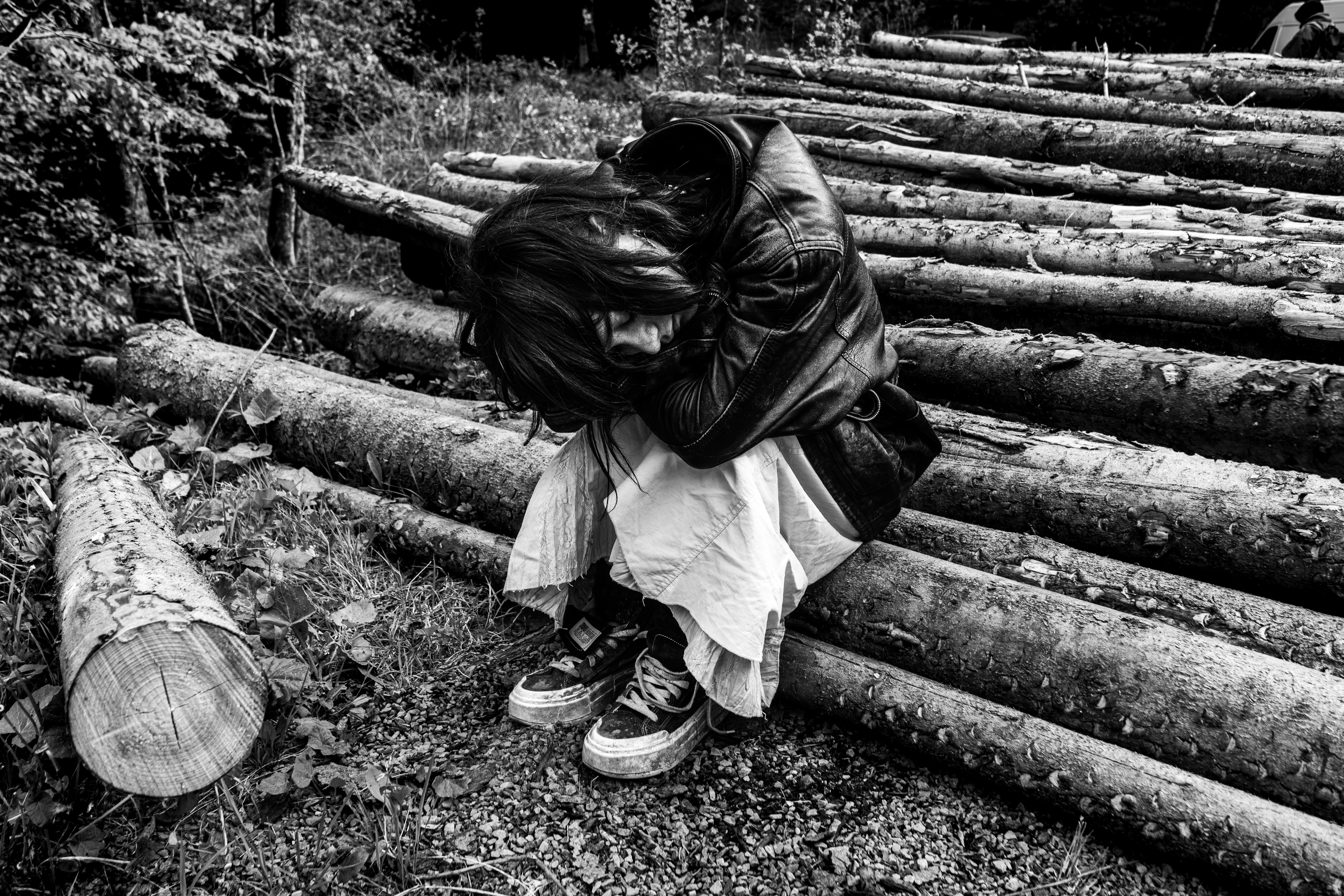
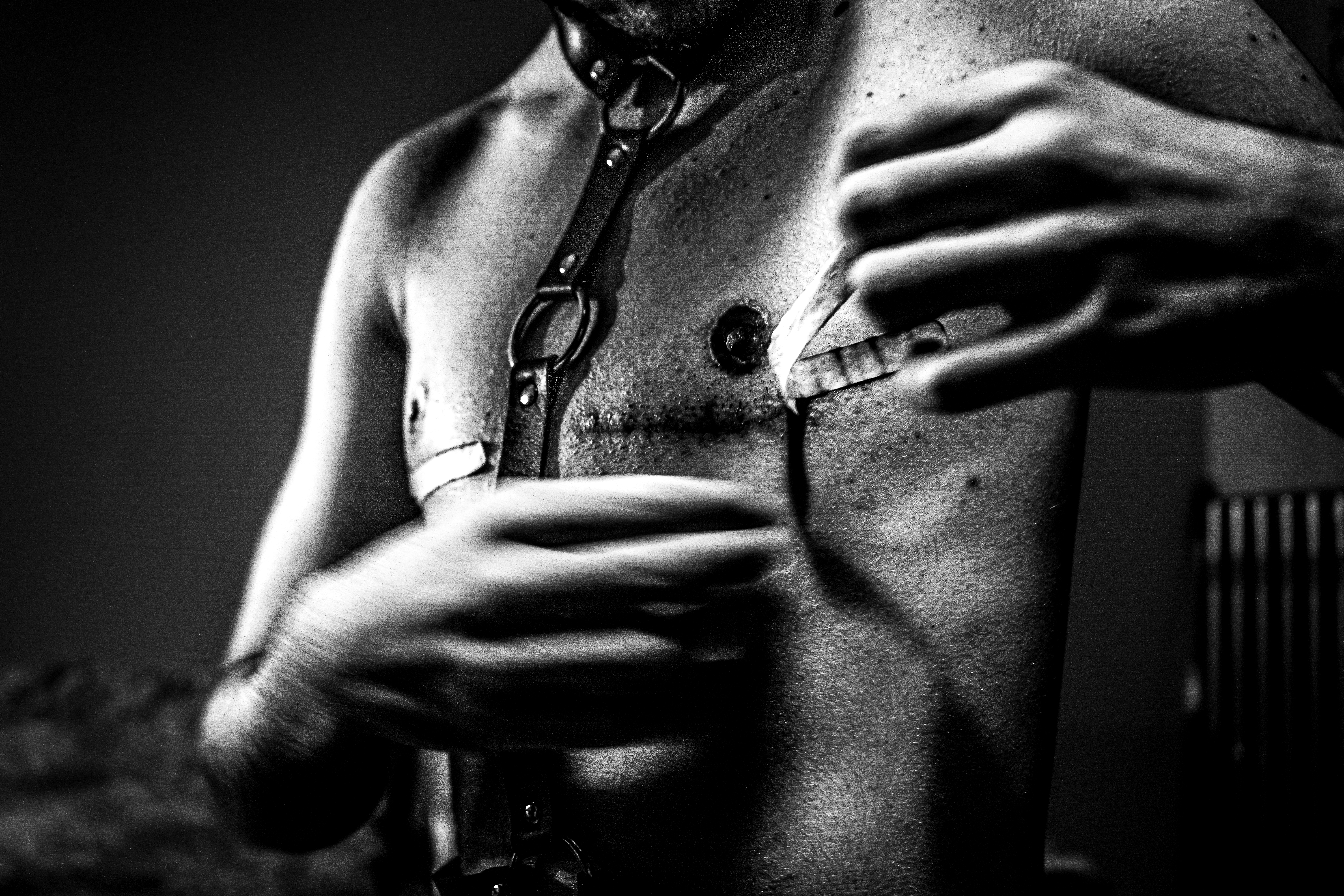
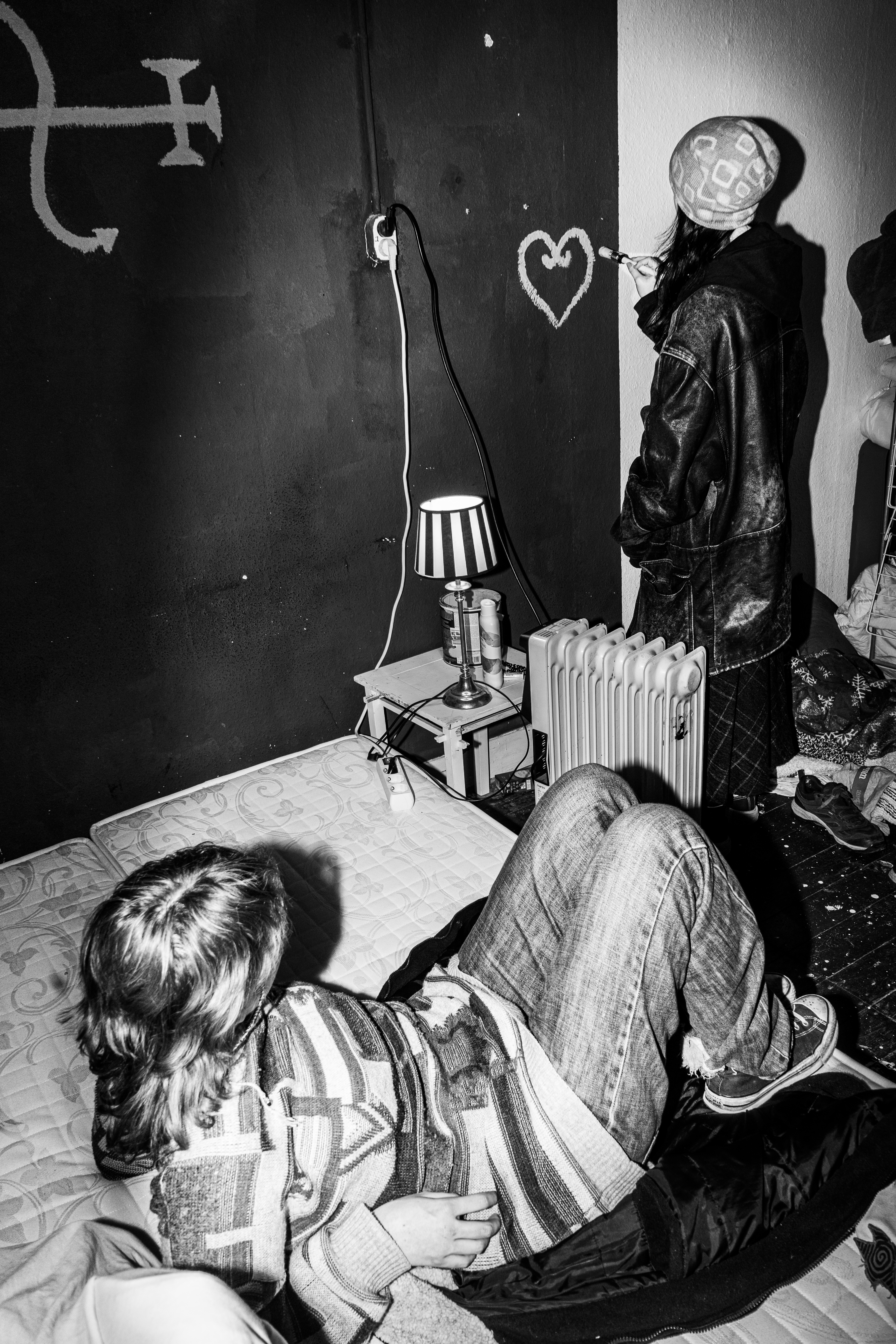
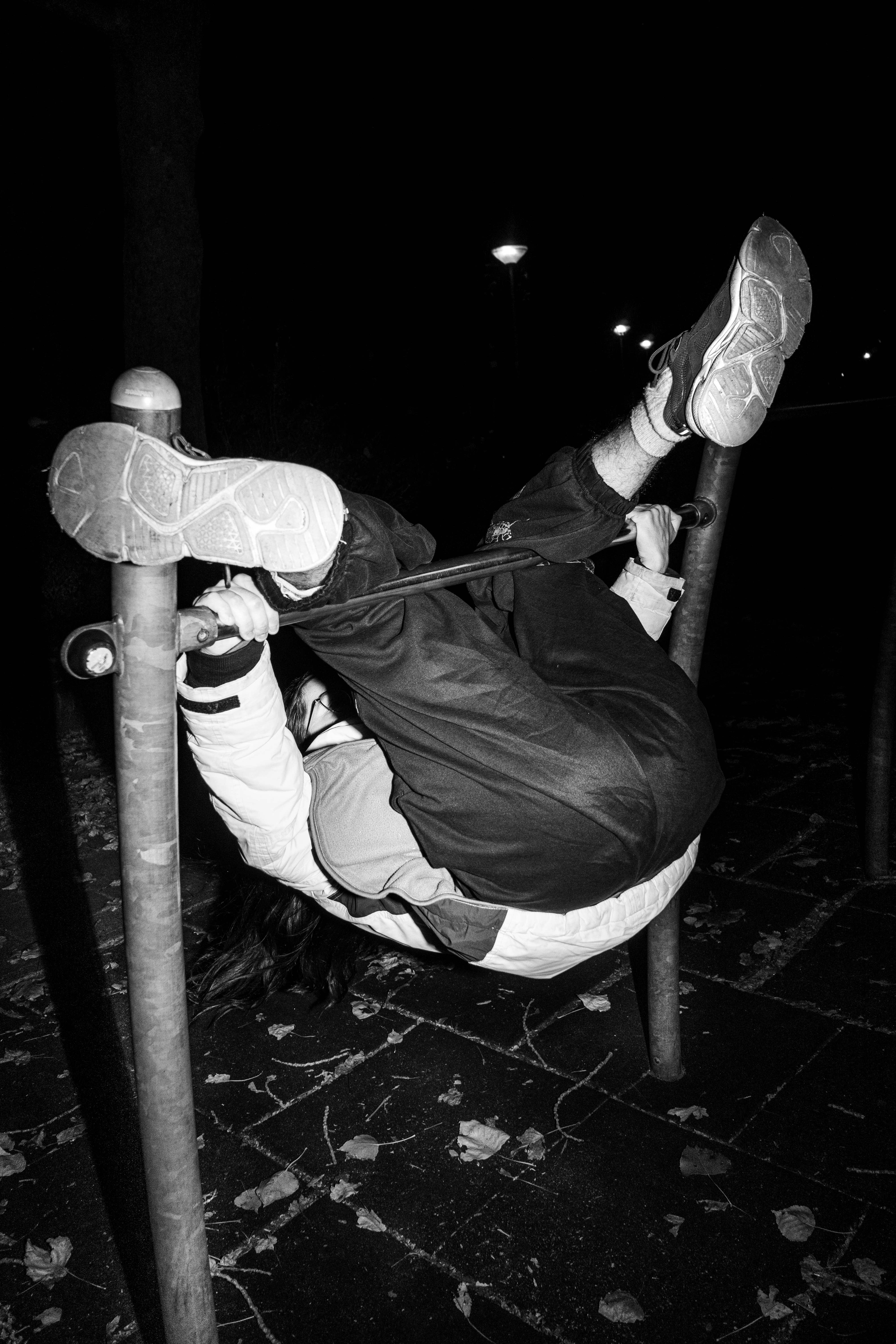
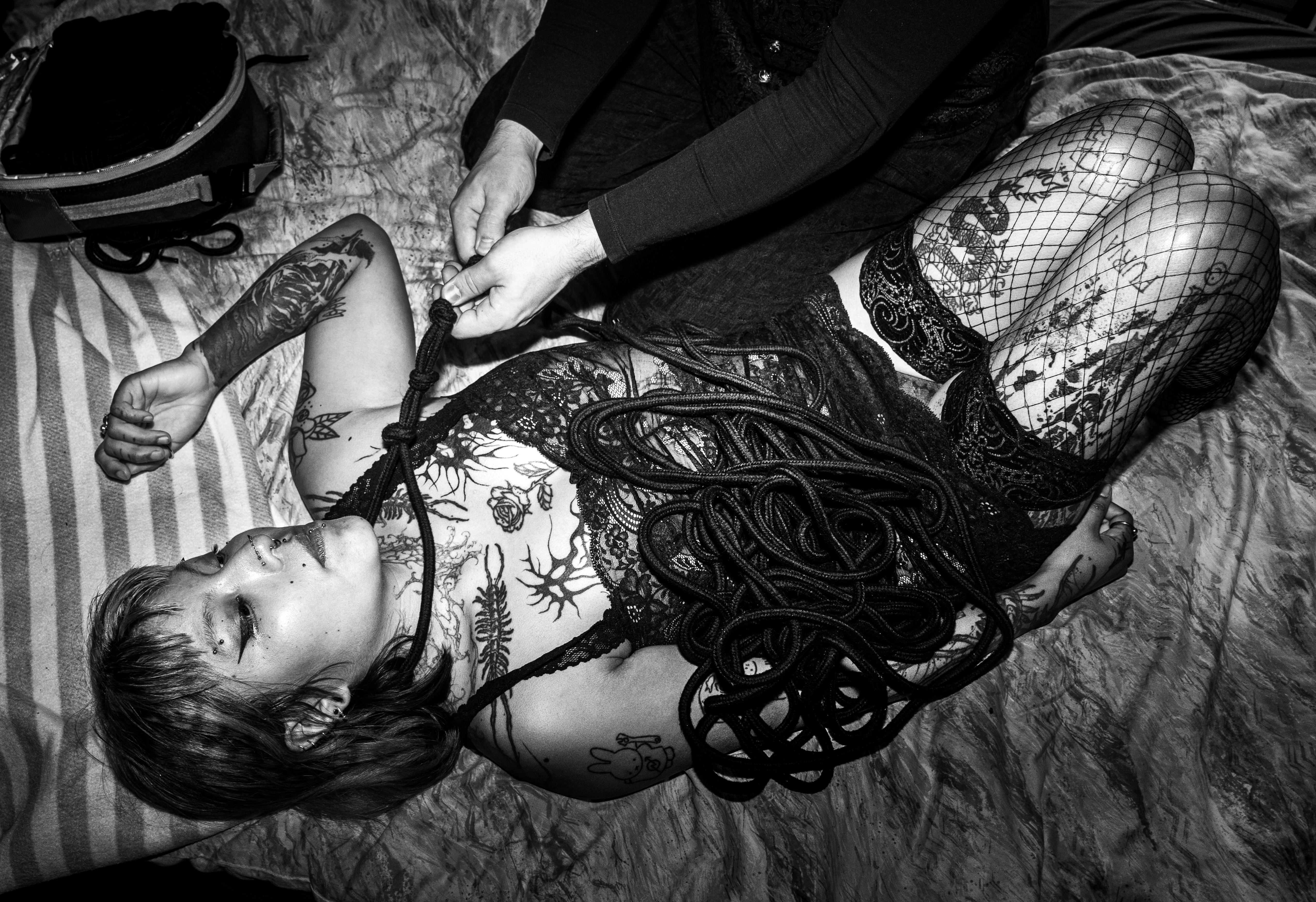
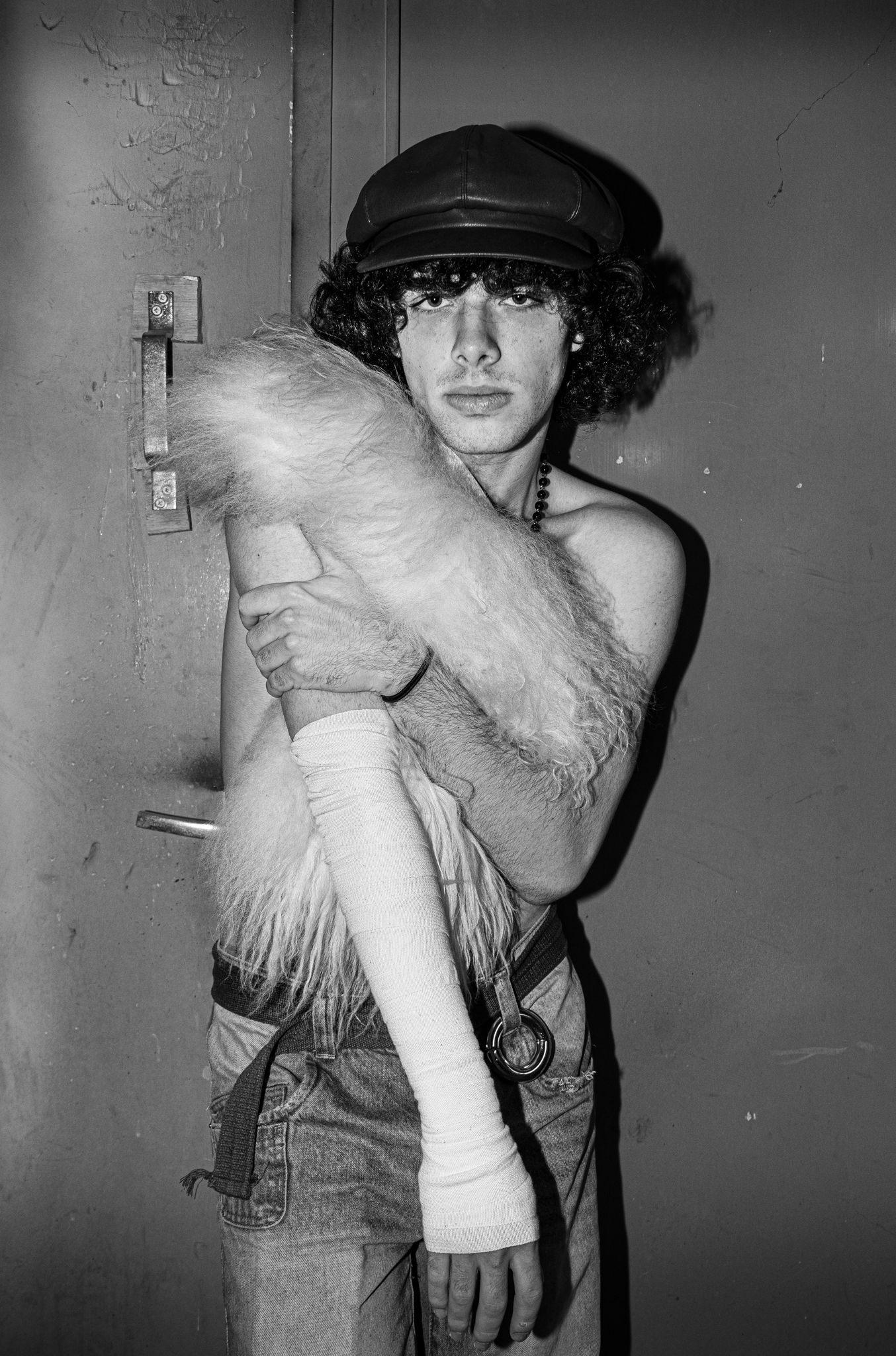
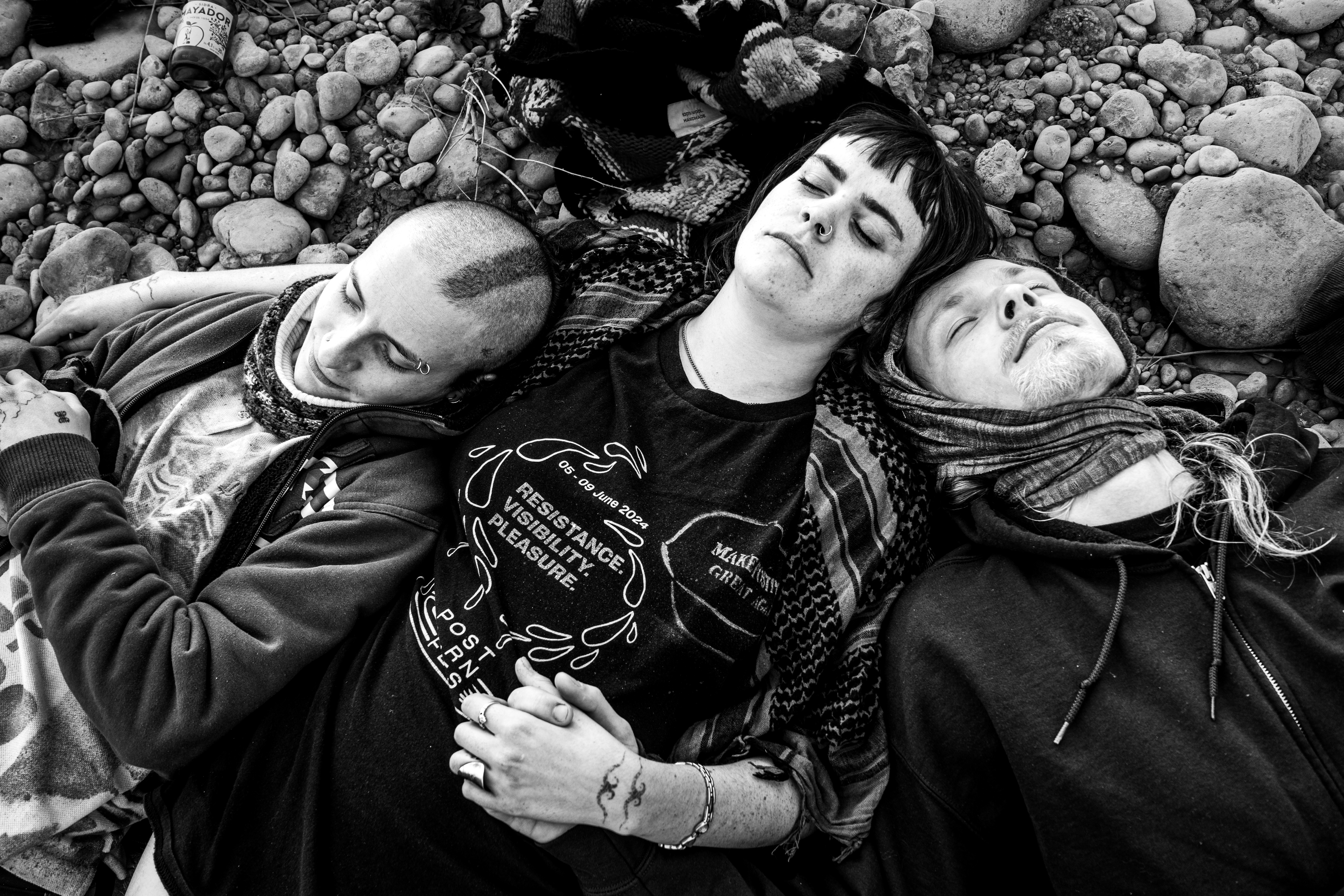
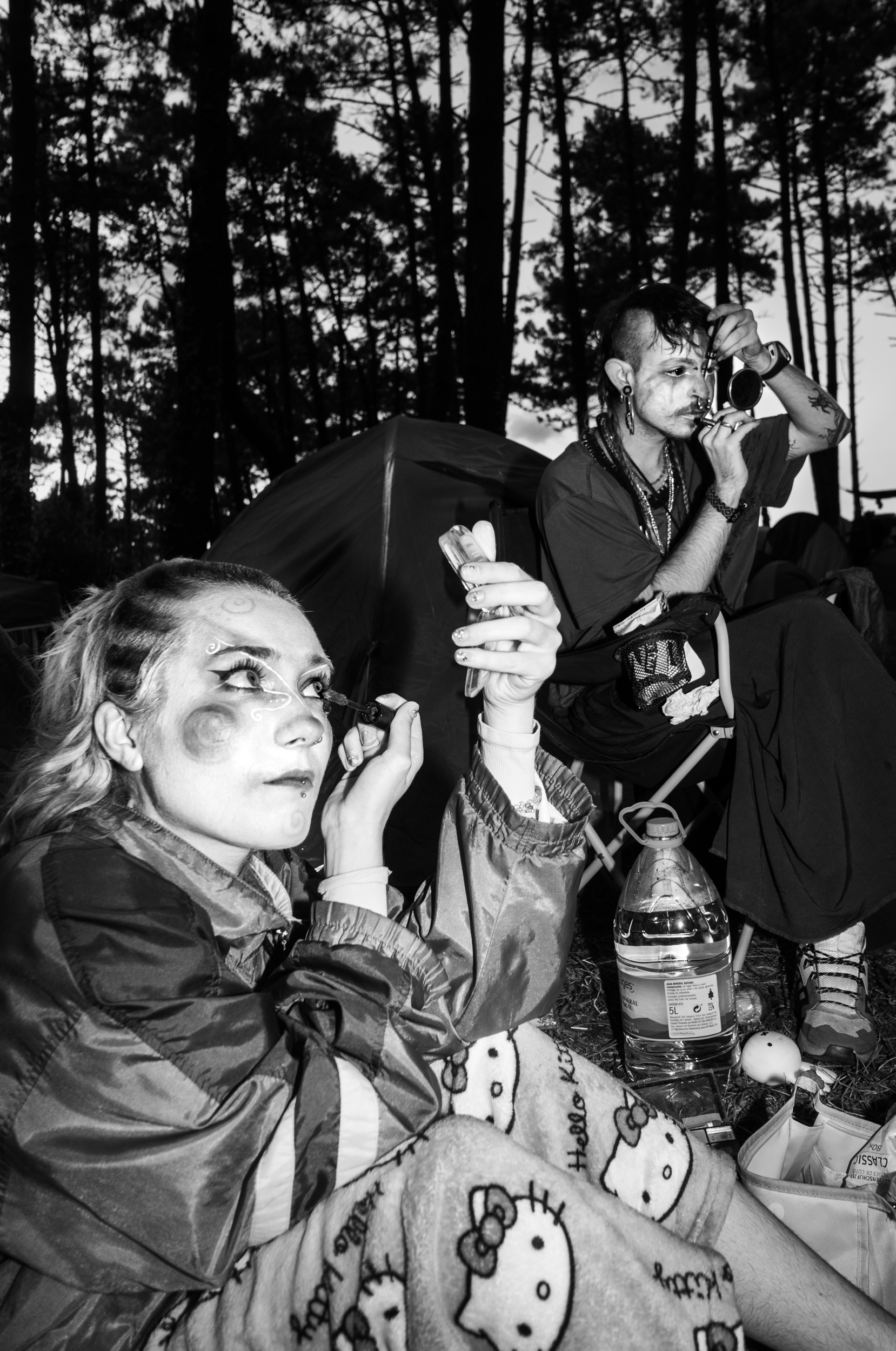
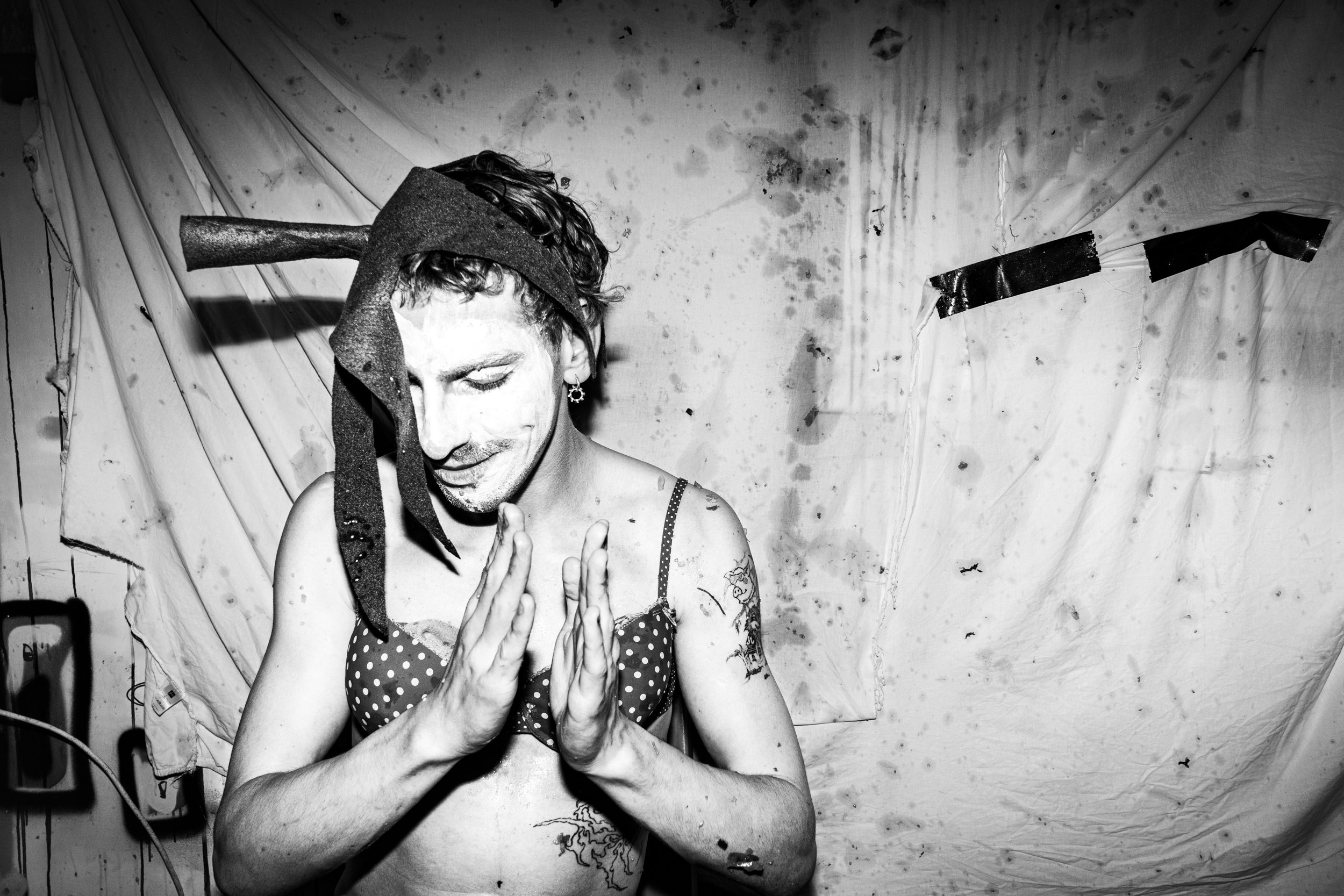
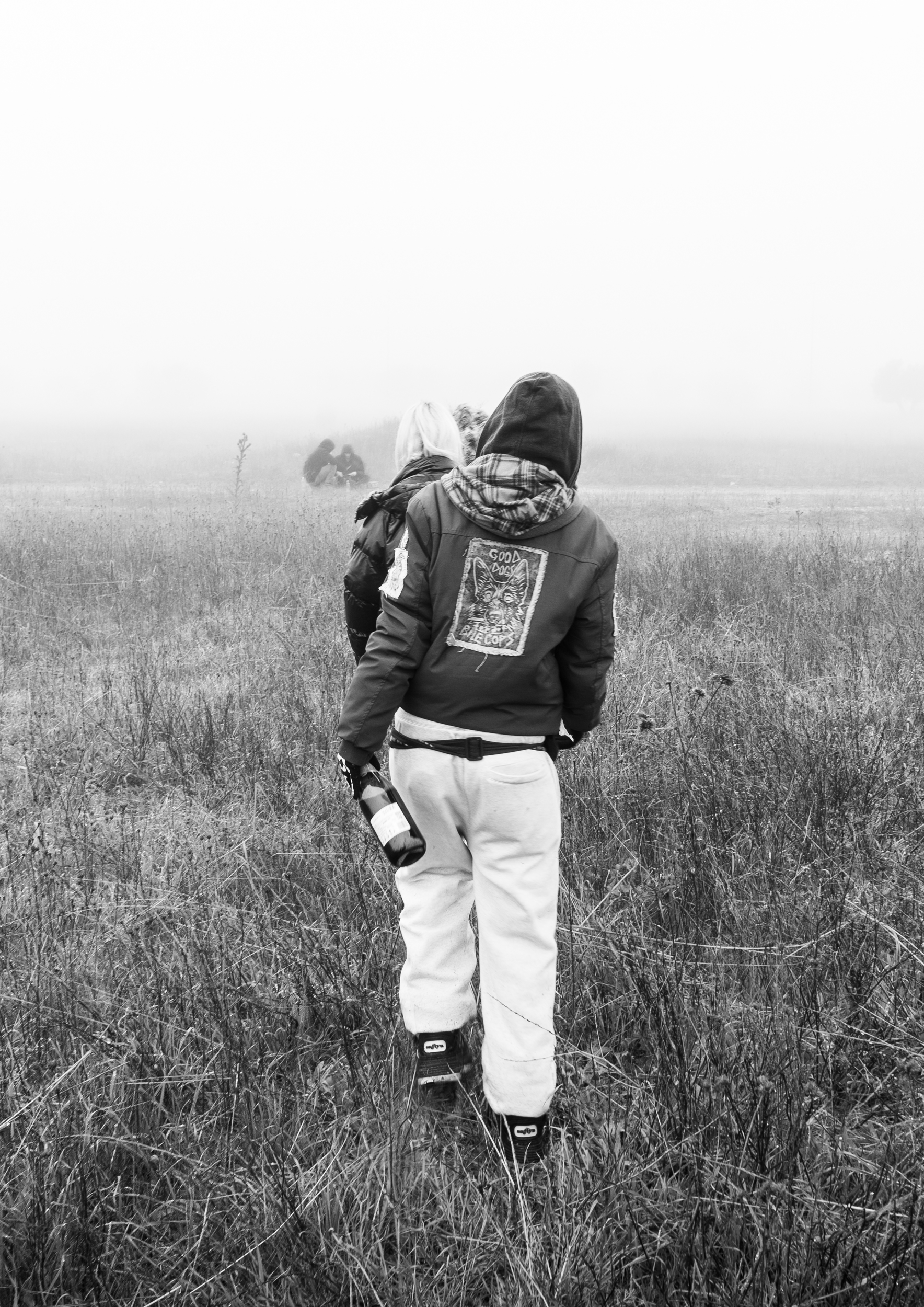
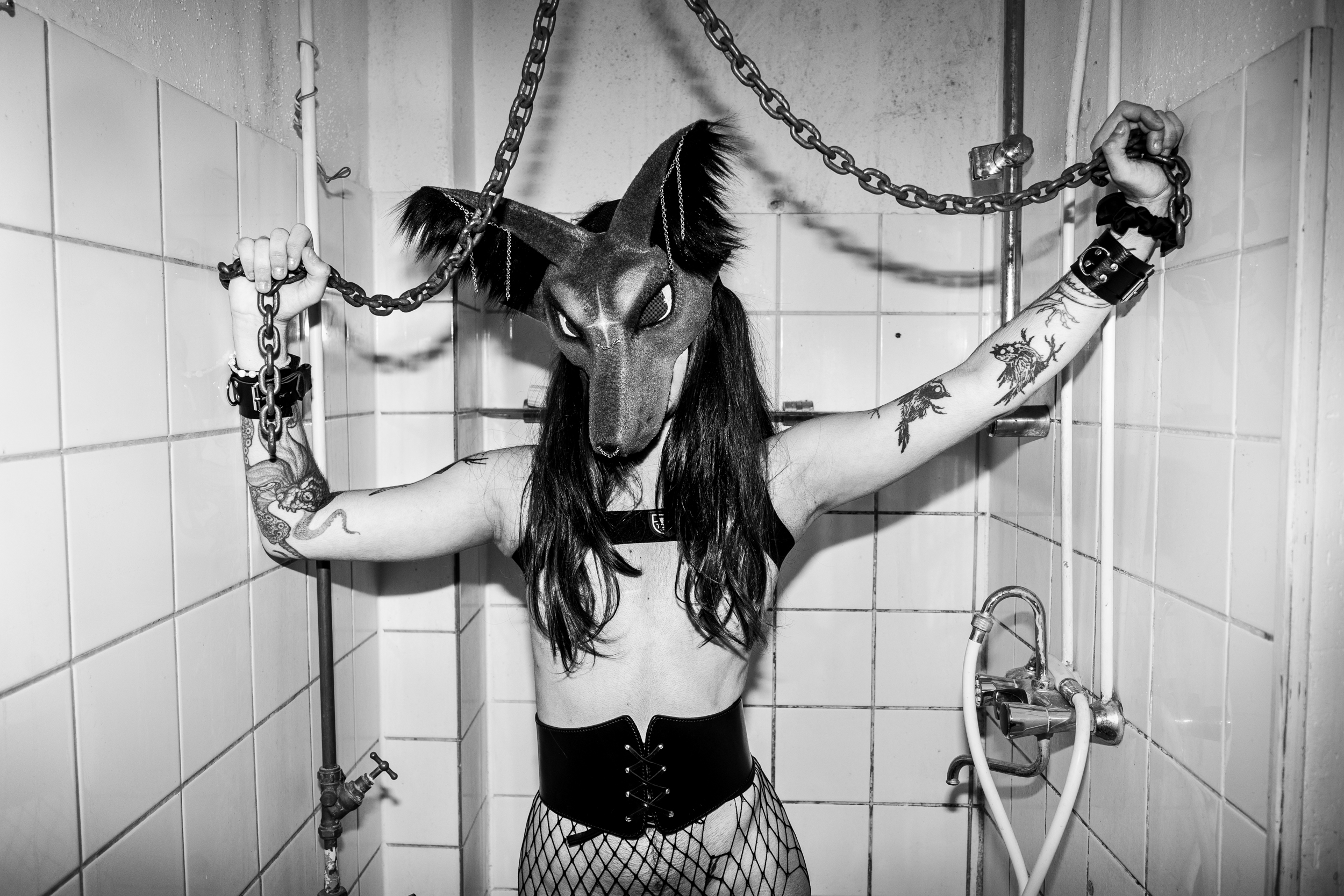
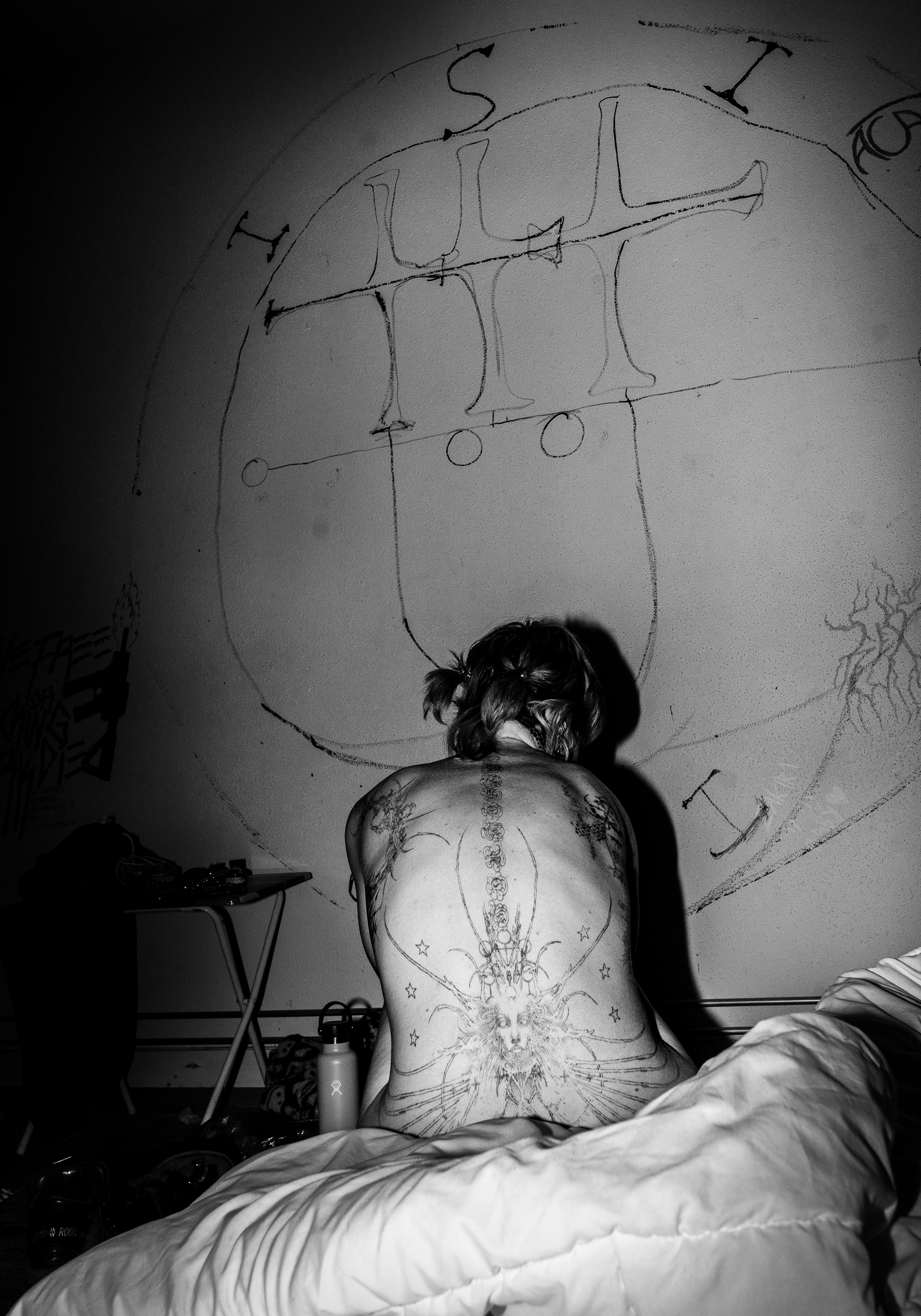
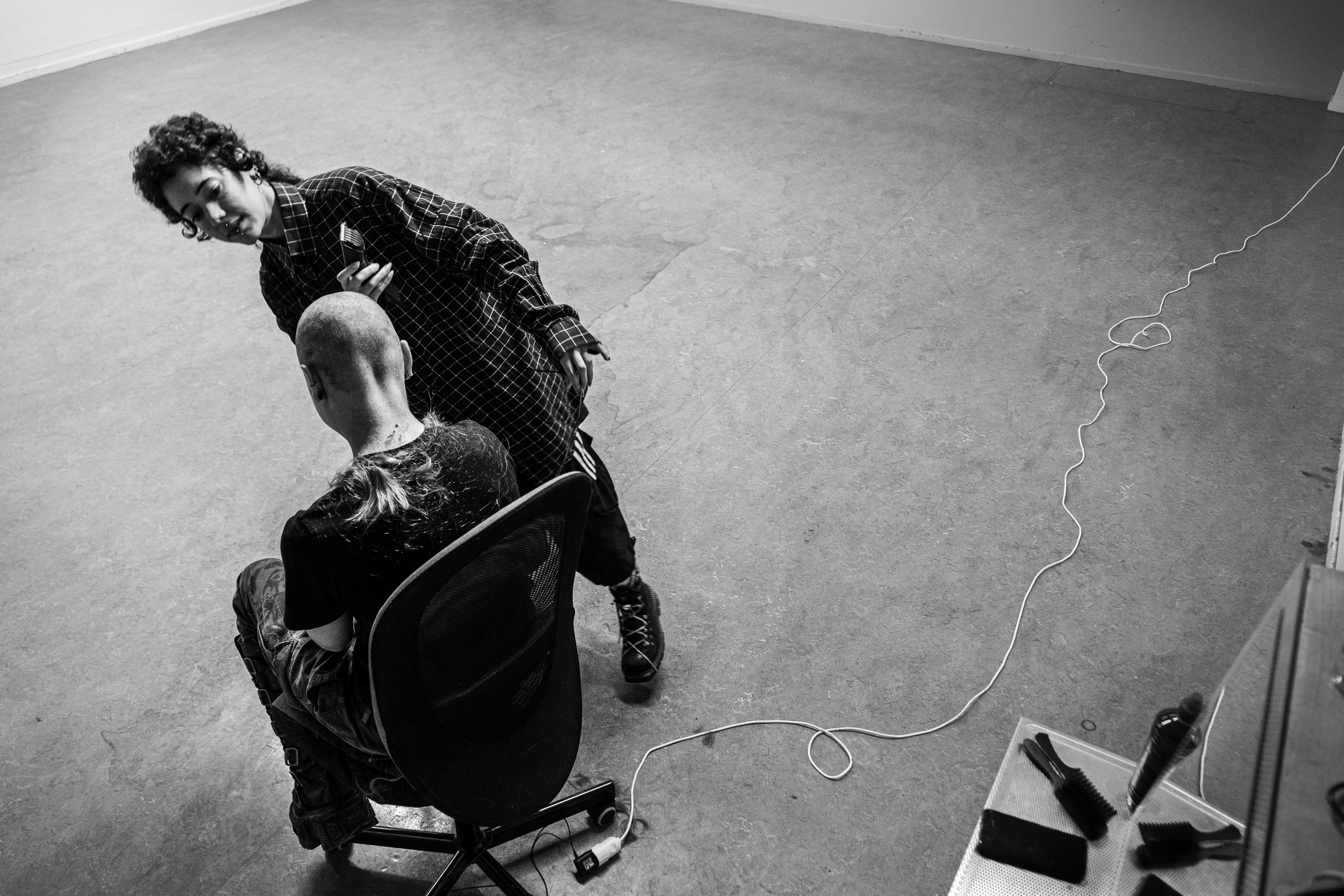
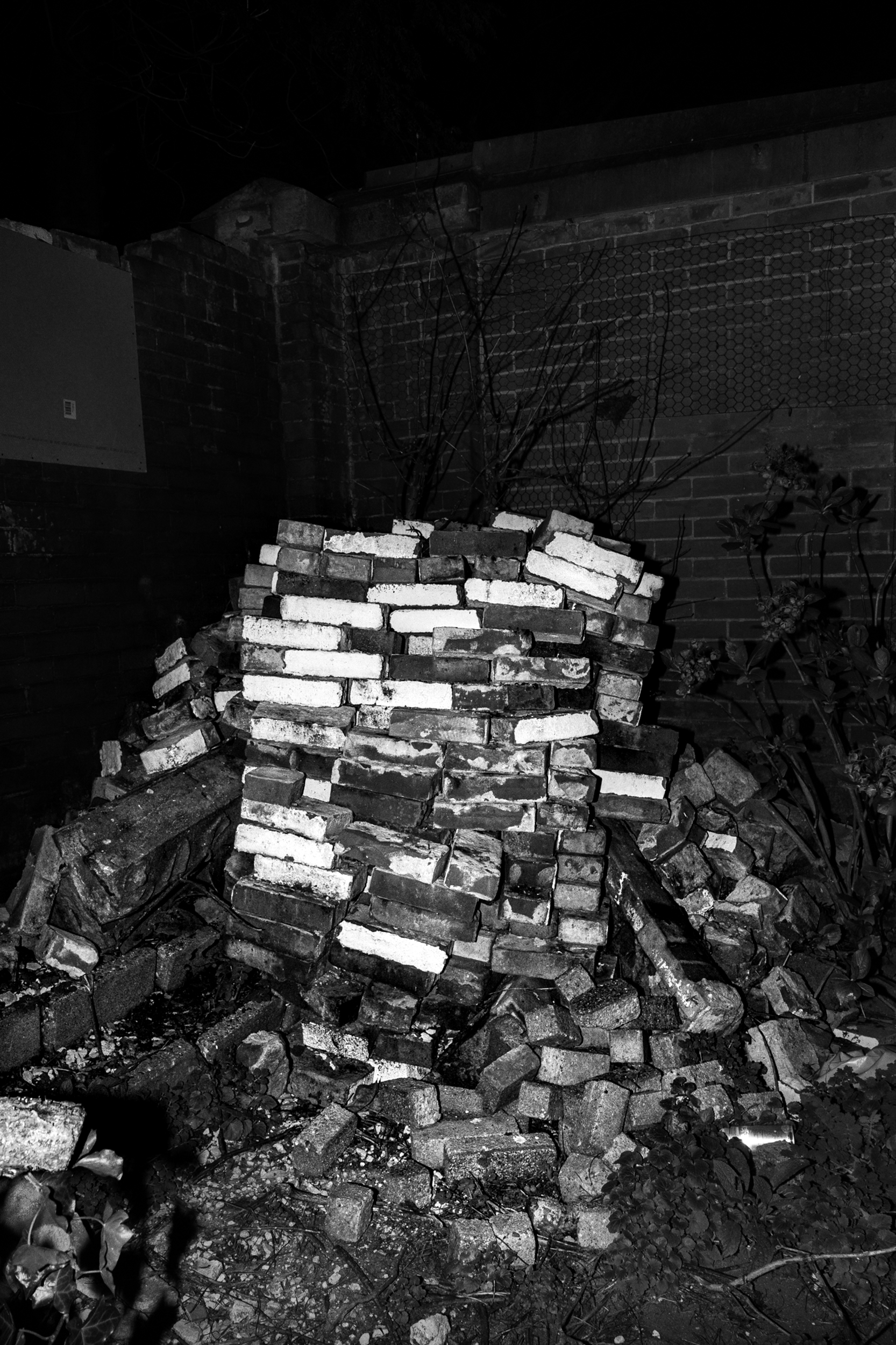
In Strays, Ghan turns the camera toward the fragile, restless world of a generation navigating the edges of conventional adulthood. The work unfolds as an intimate autobiographical diary, tracing the lives of friends, lovers, and companions in nights that blur into mornings.
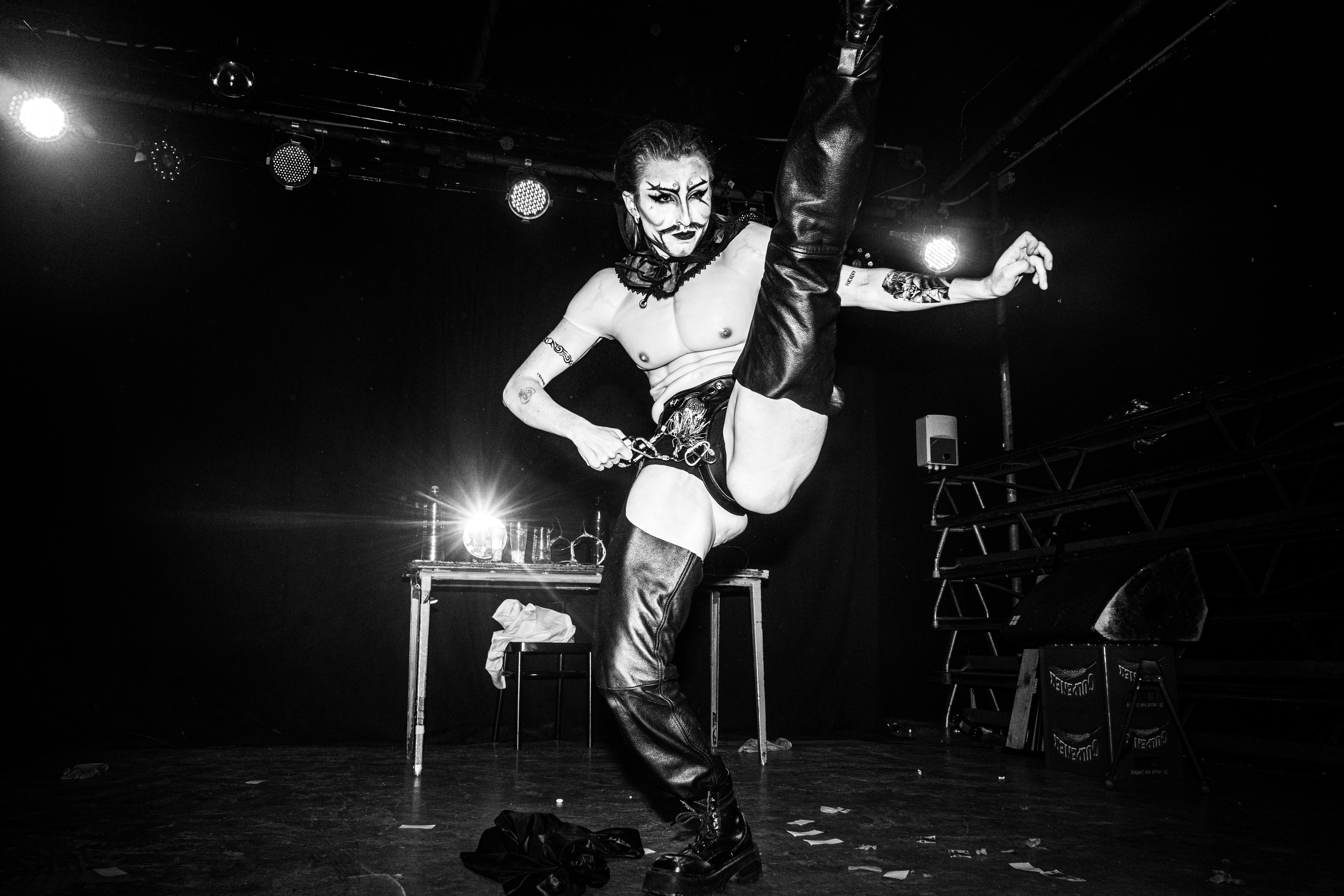
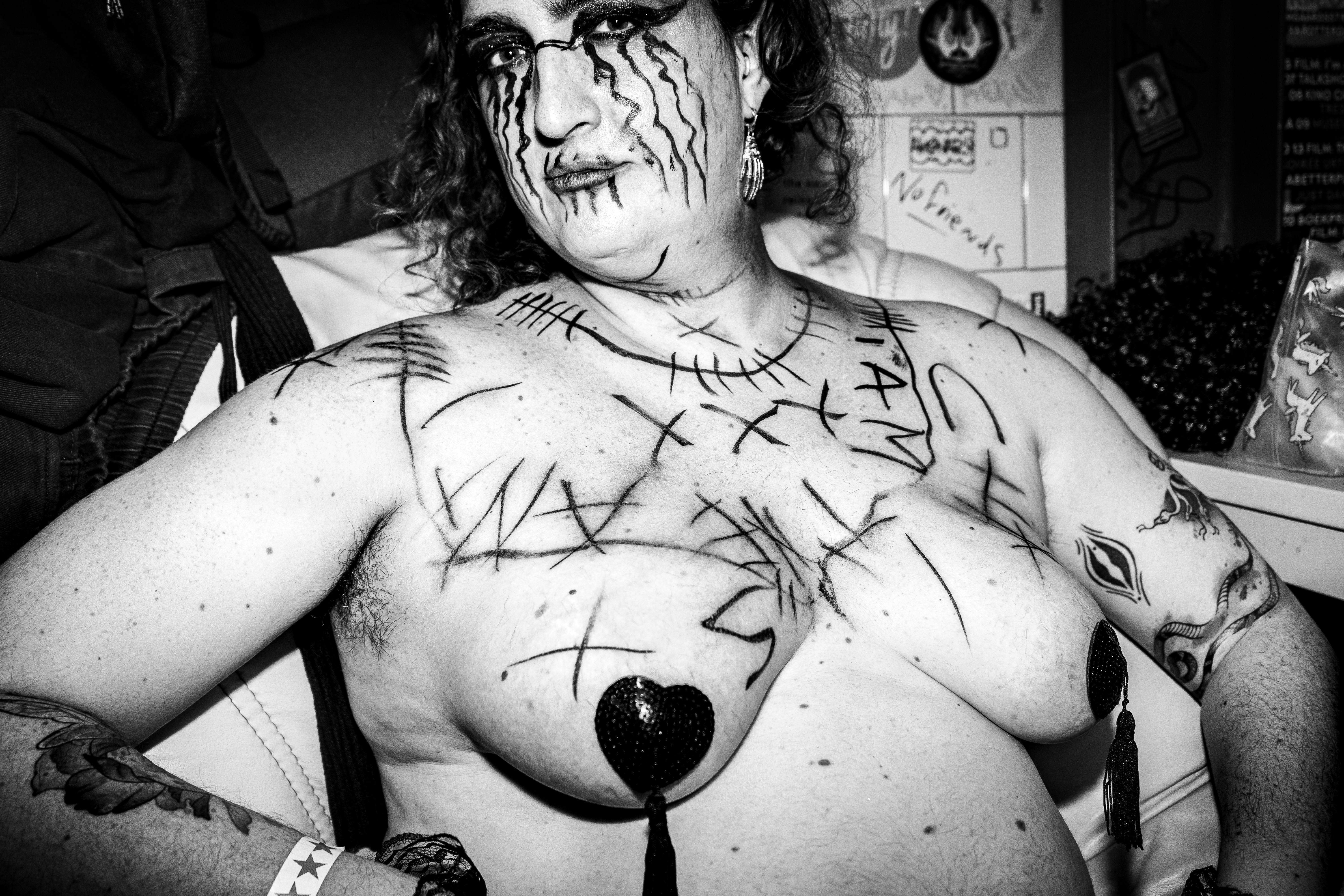
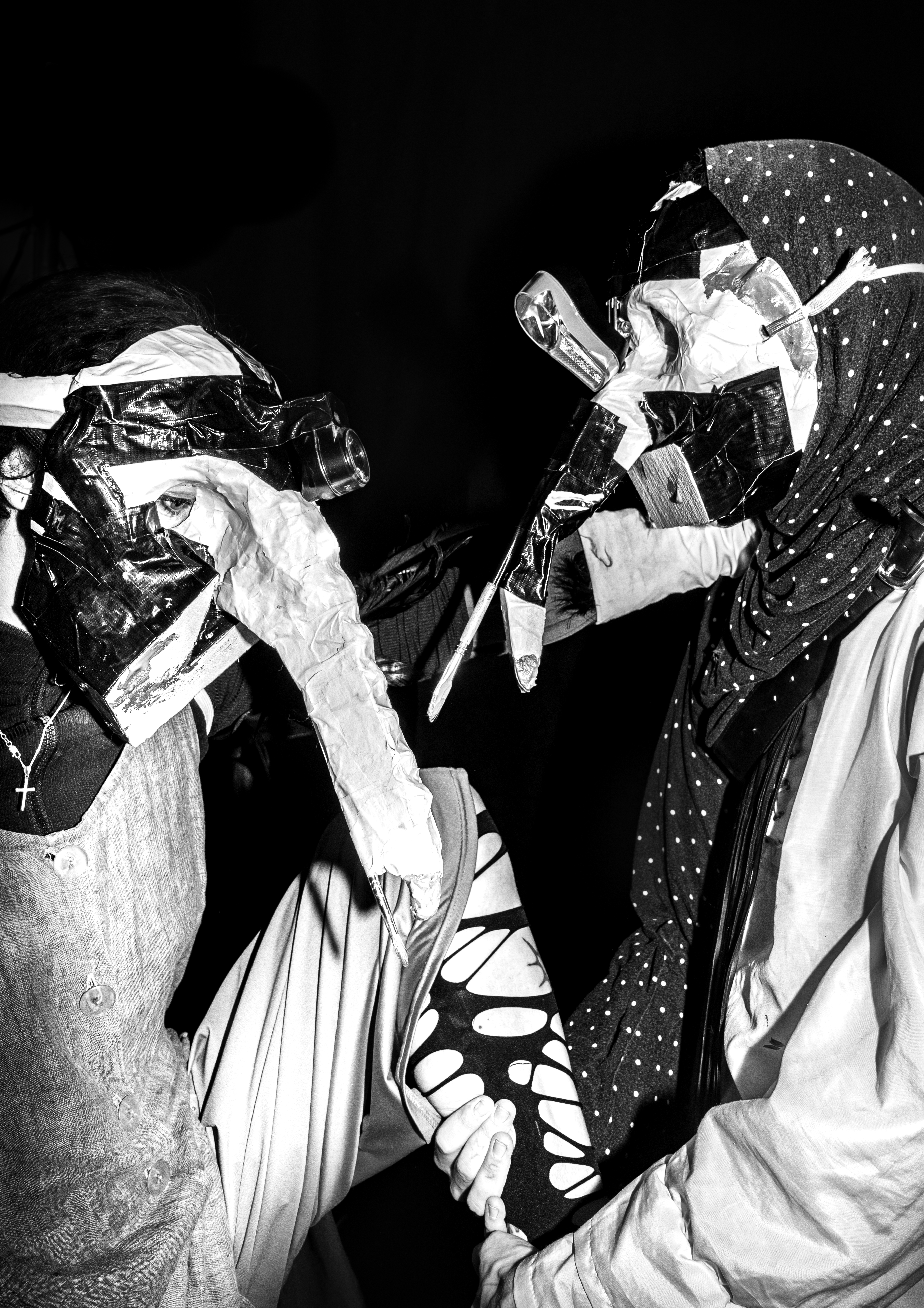
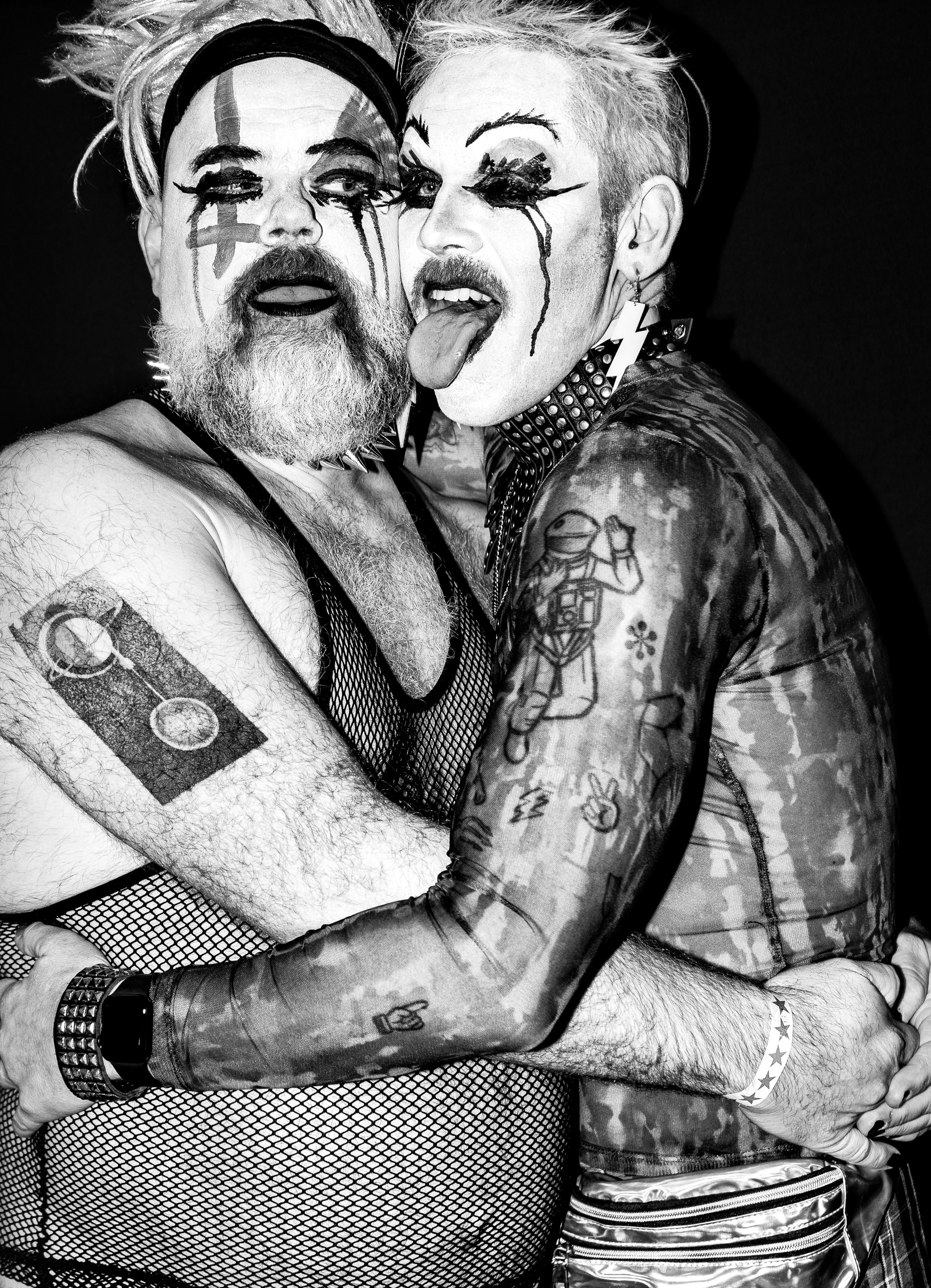
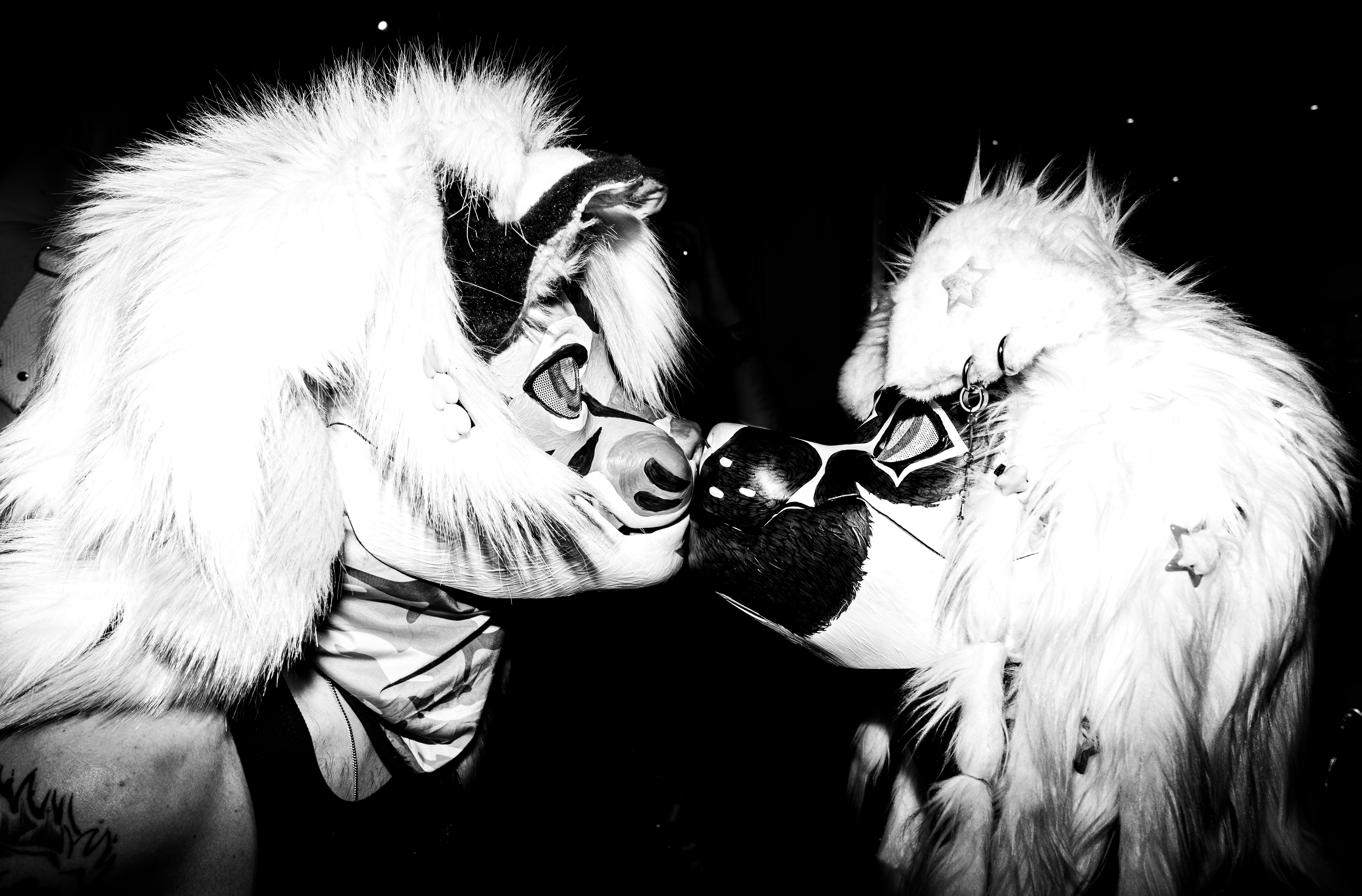
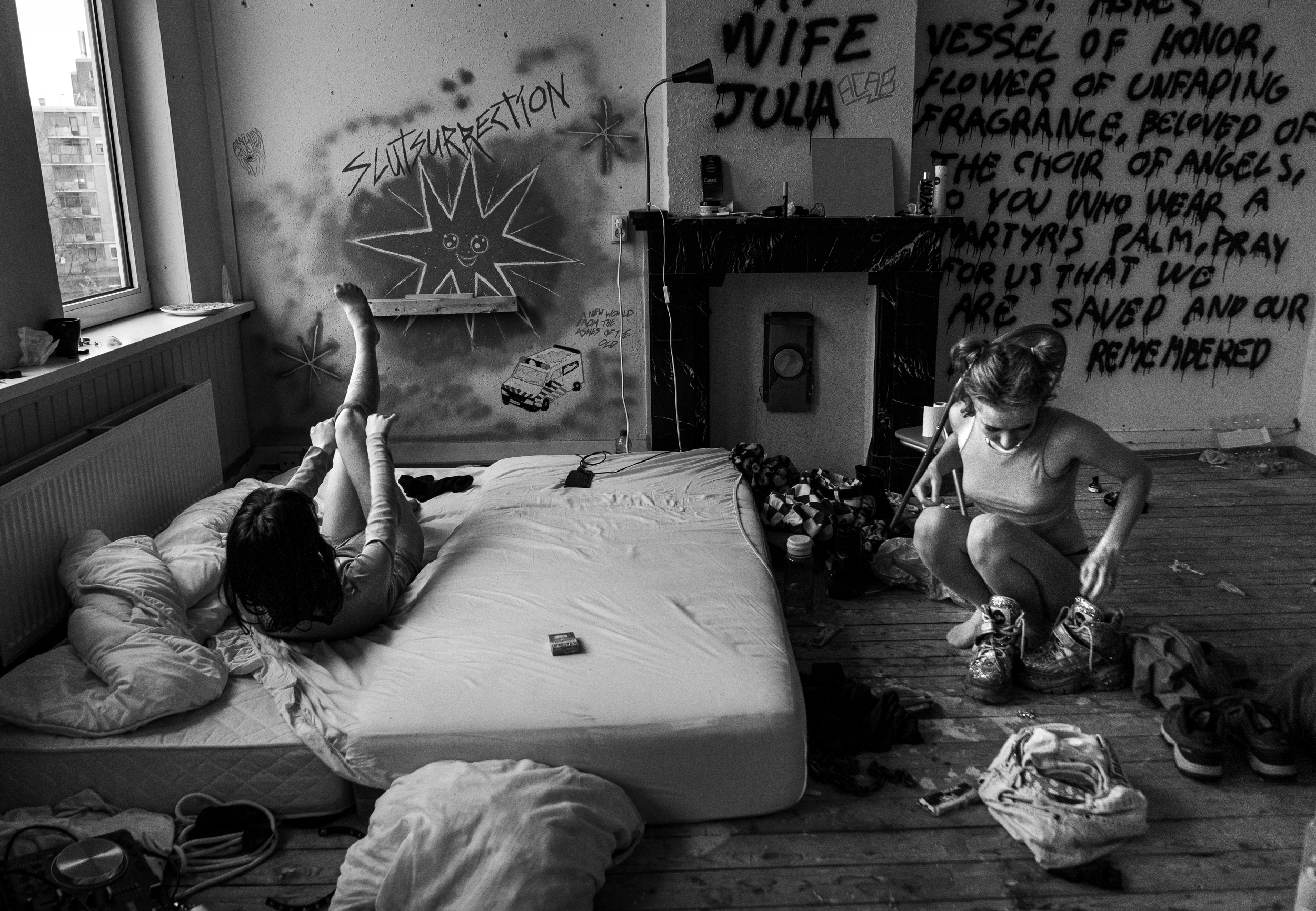
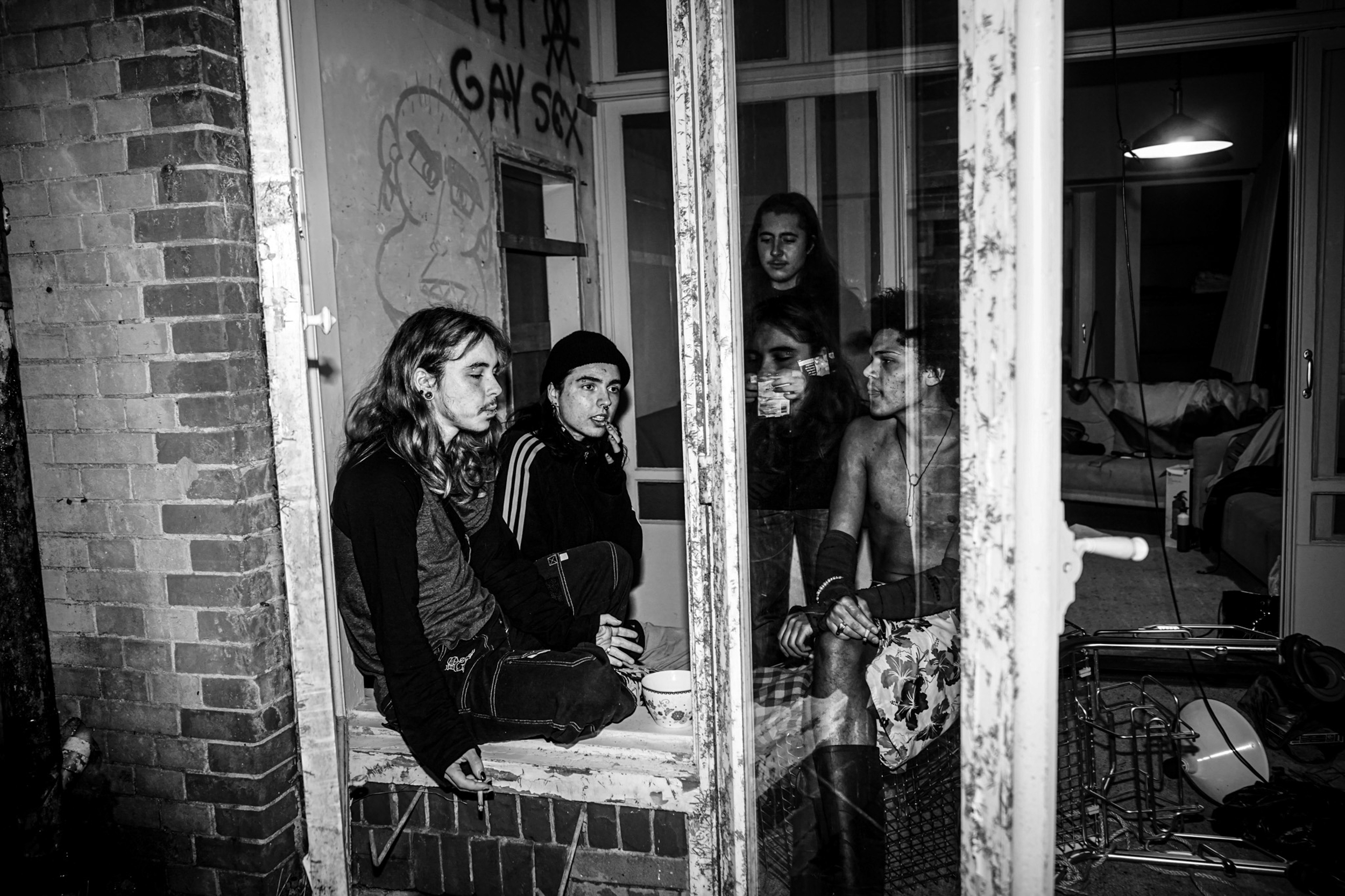
Rather than framing a single subculture, Ghan reveals a constellation of lives bound by shared dislocation: squatters, punks, ravers, gender-nonconforming individuals, and others moving through the uncertainties of early adulthood. What unites them is not a label, but a quiet recognition of shared vulnerabilities and defiance.
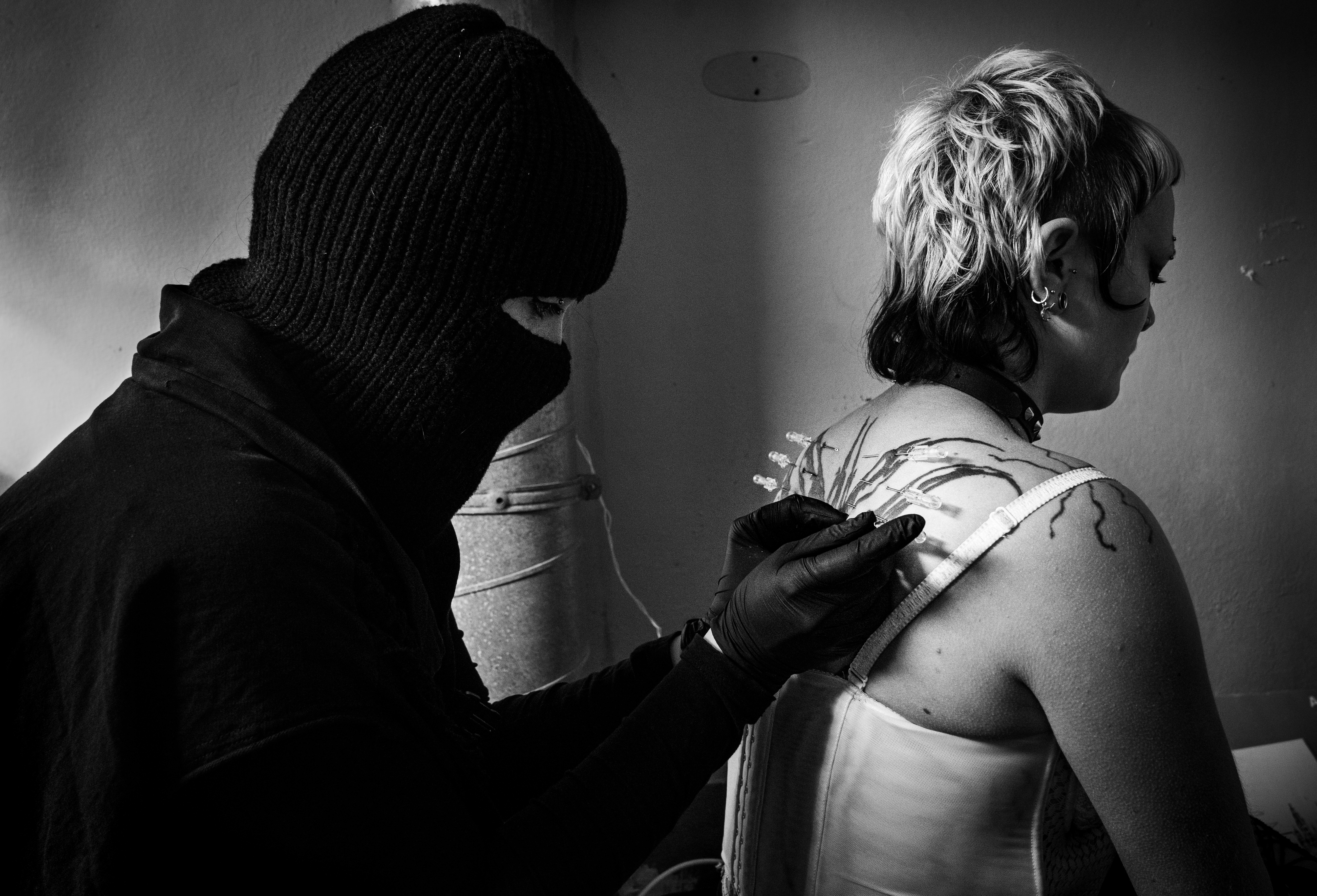
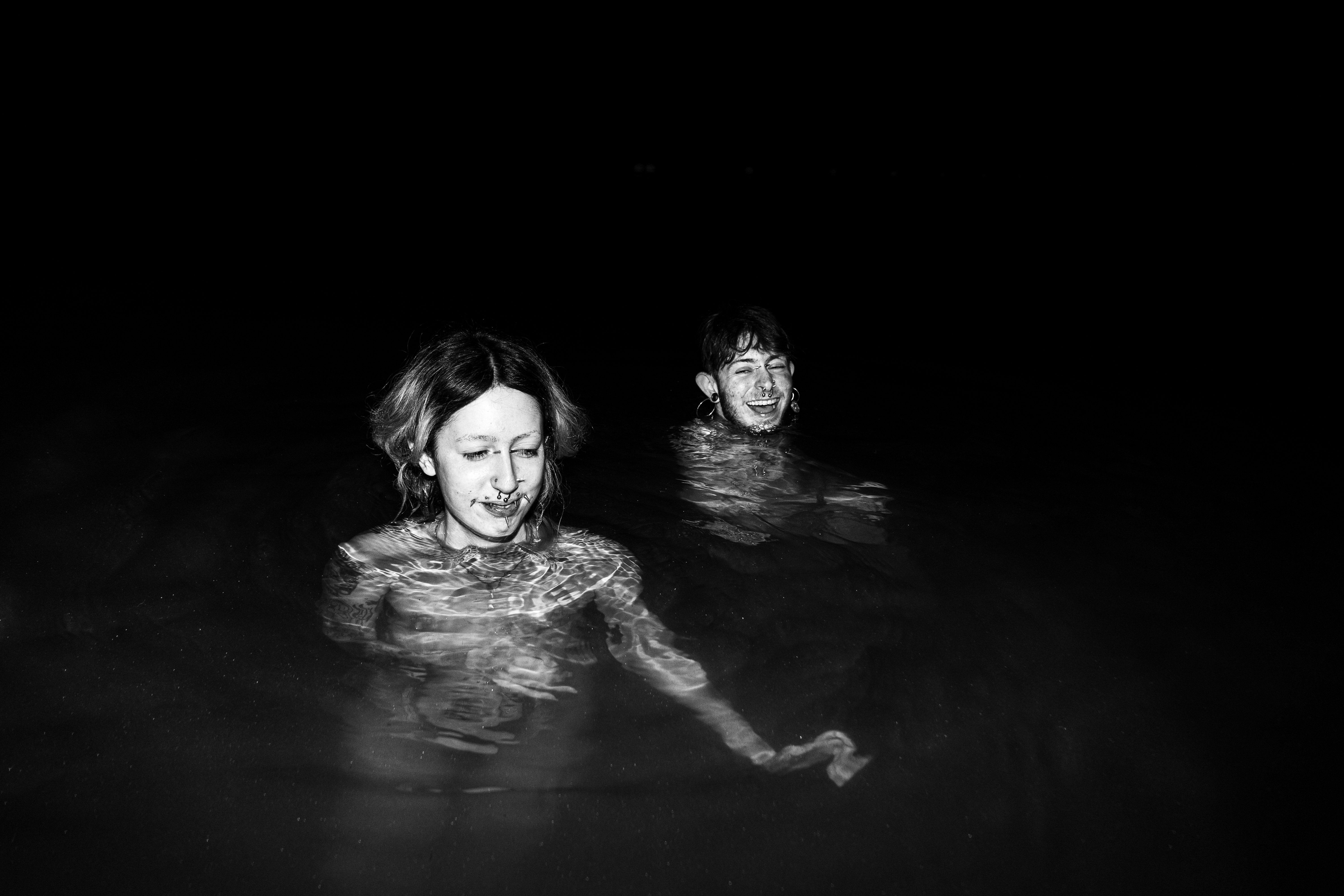
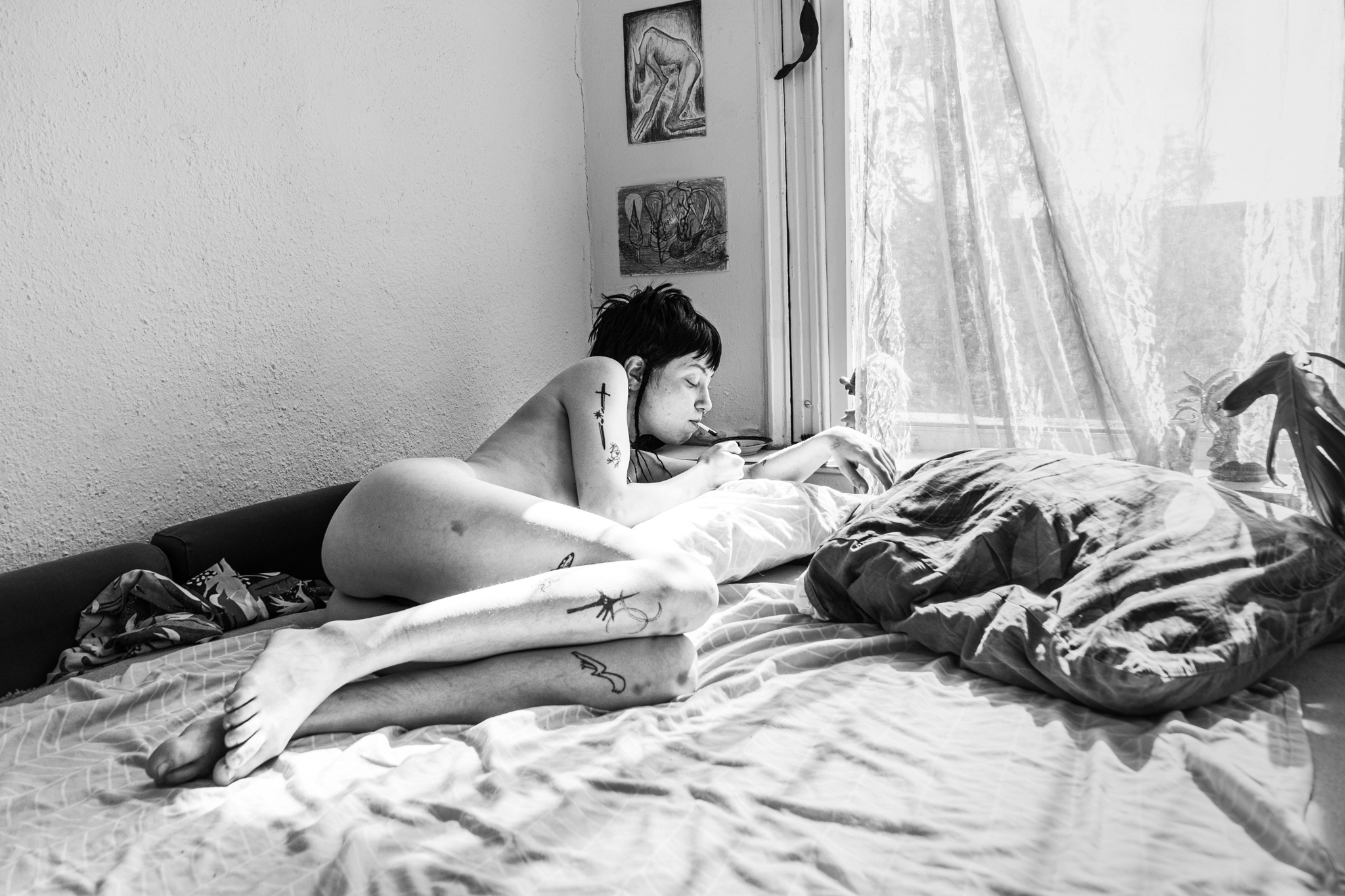
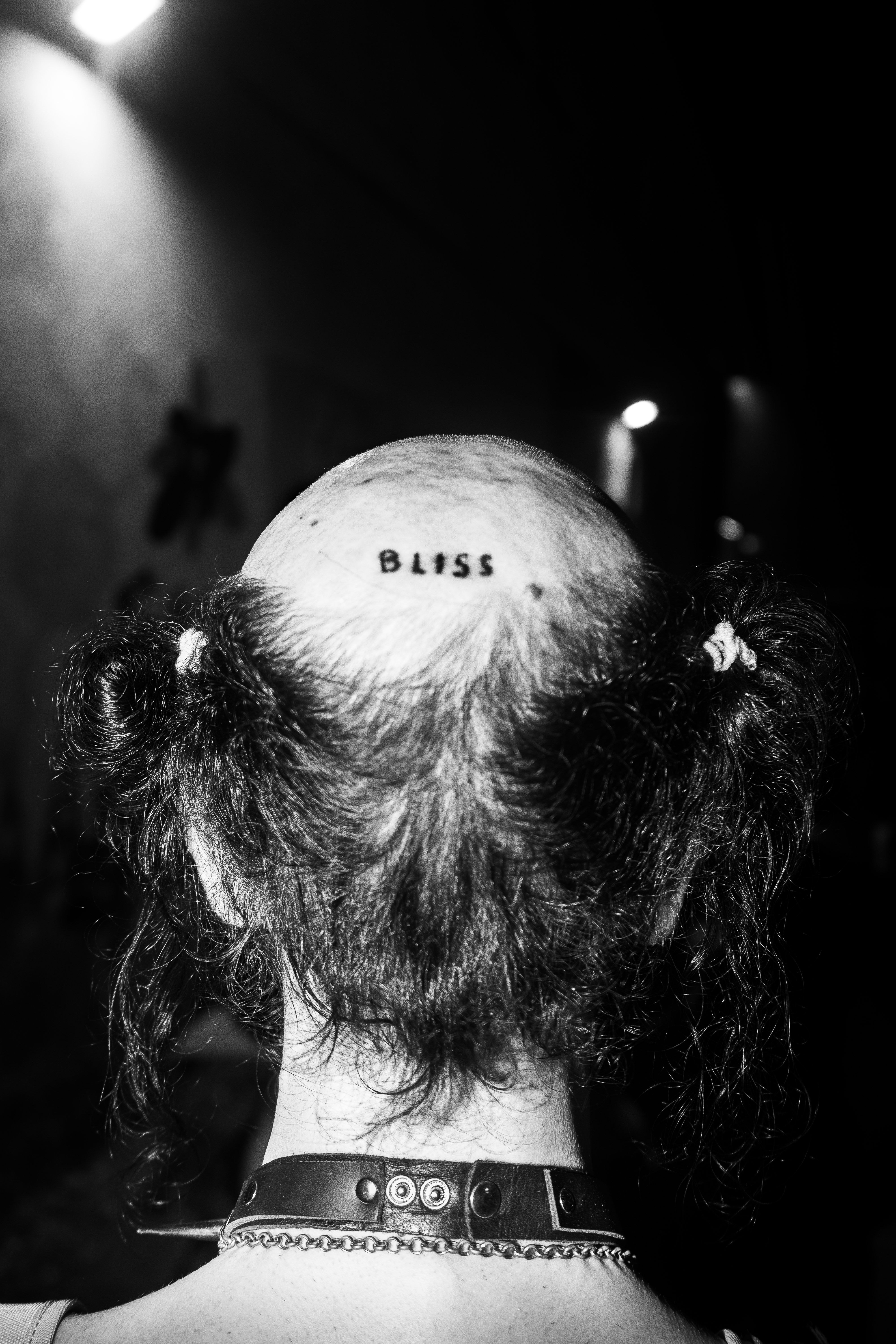
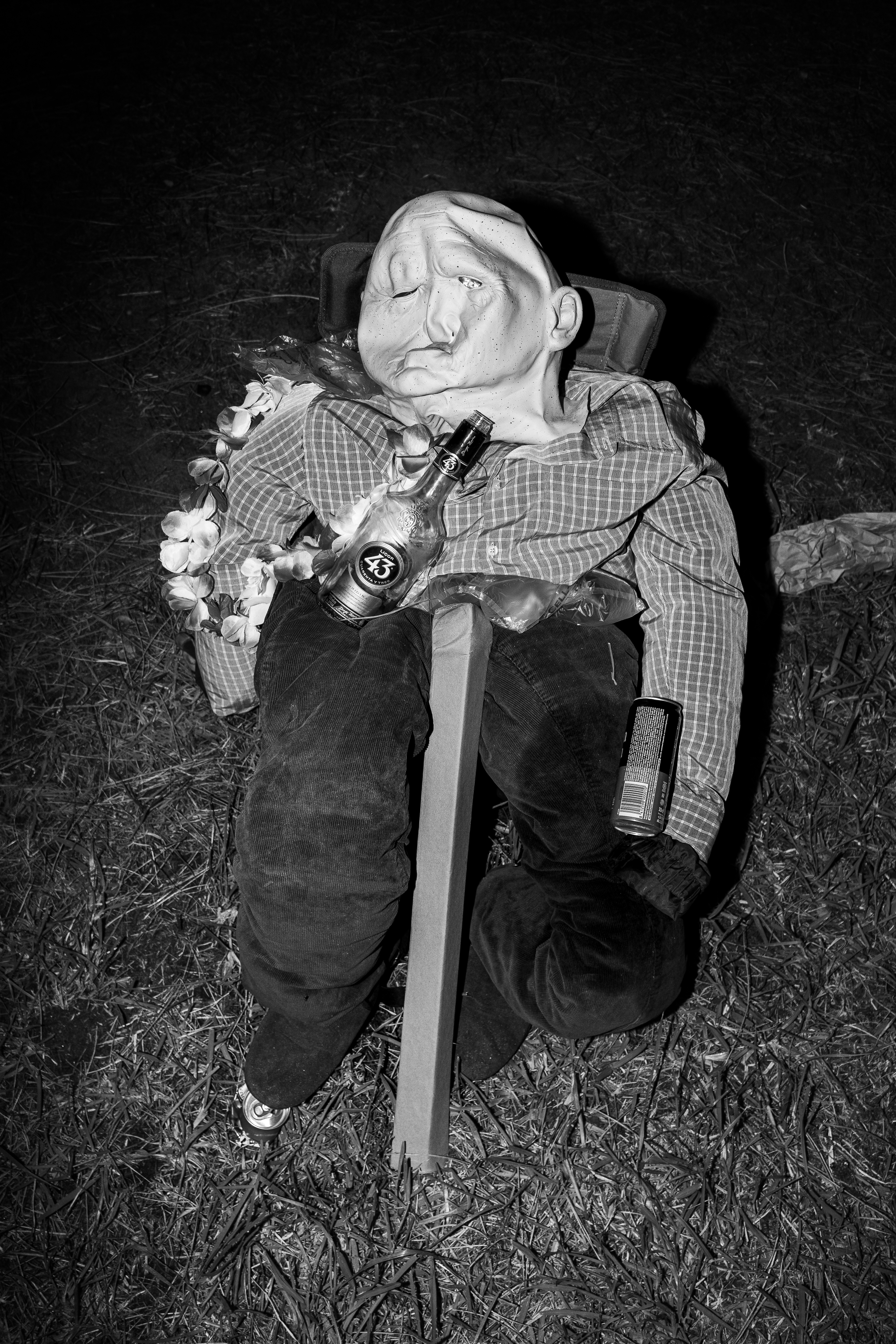
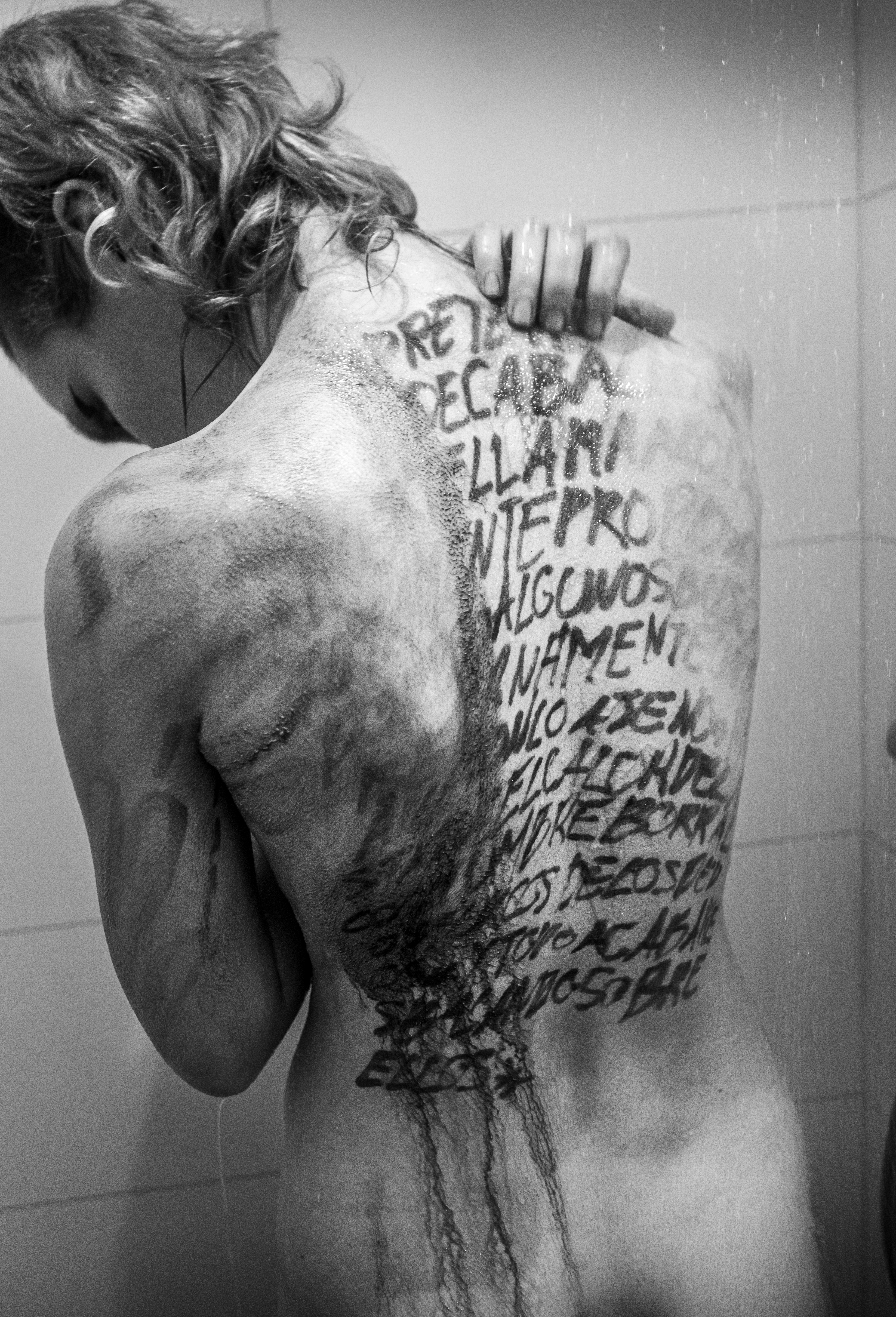
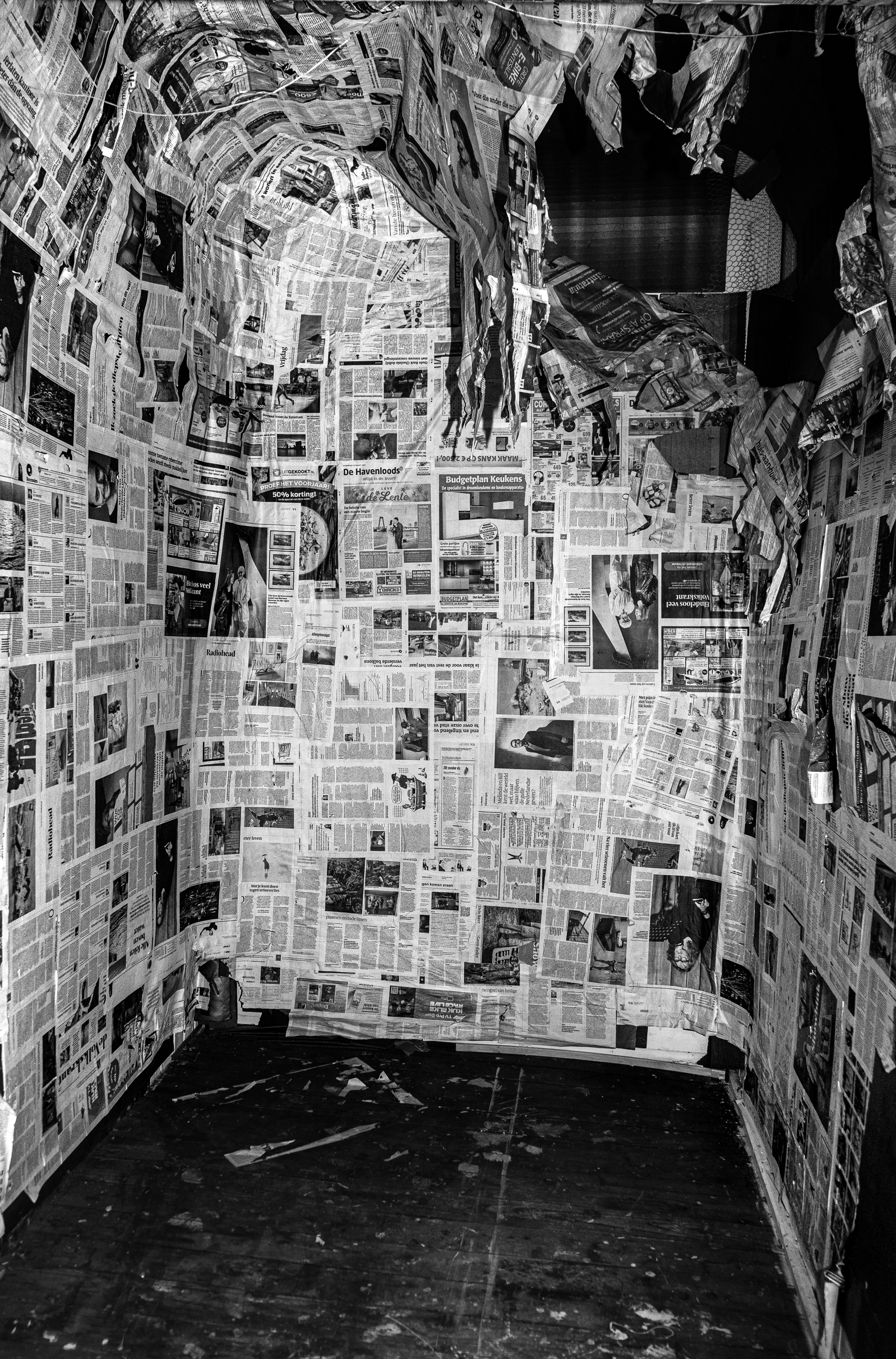
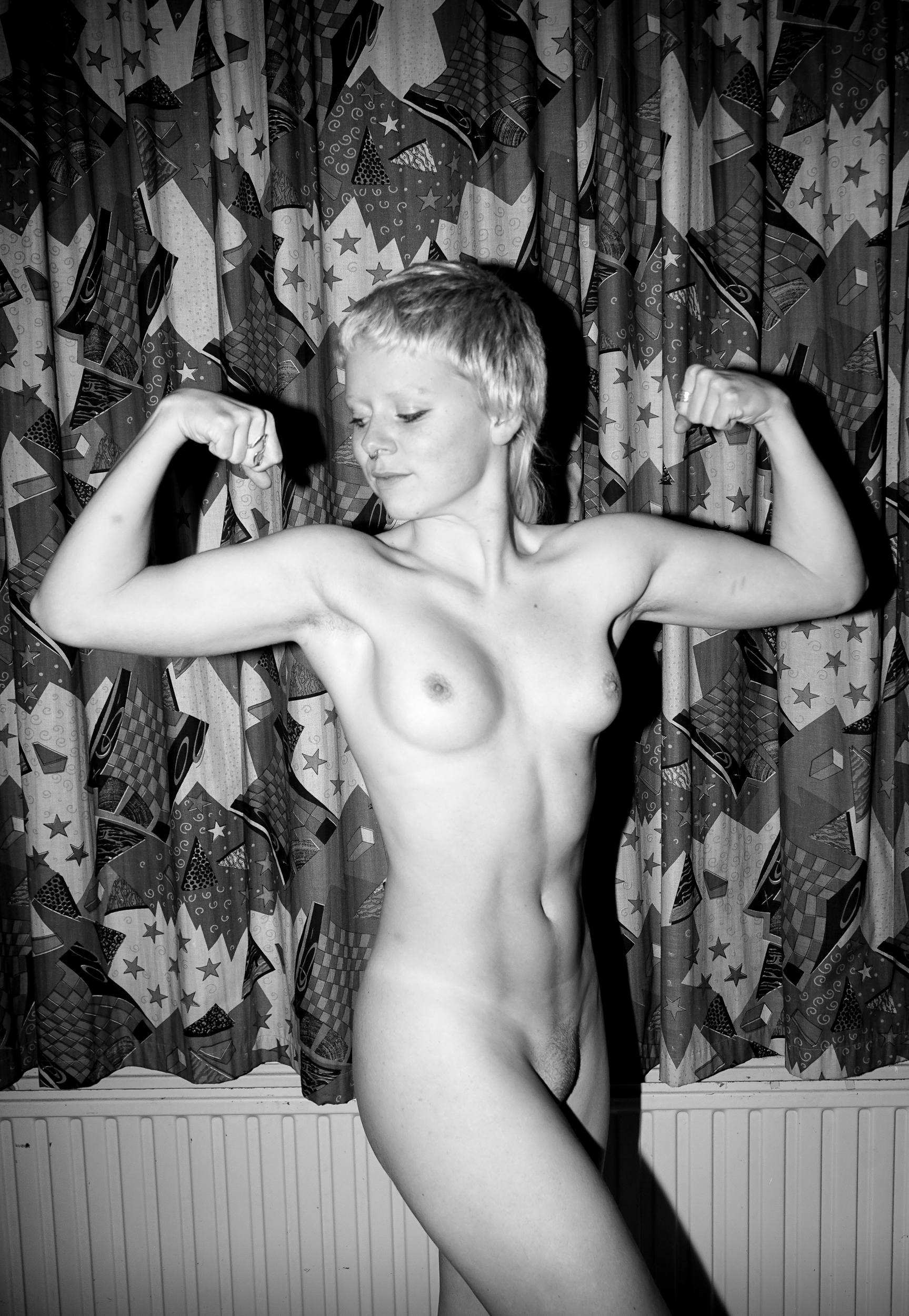
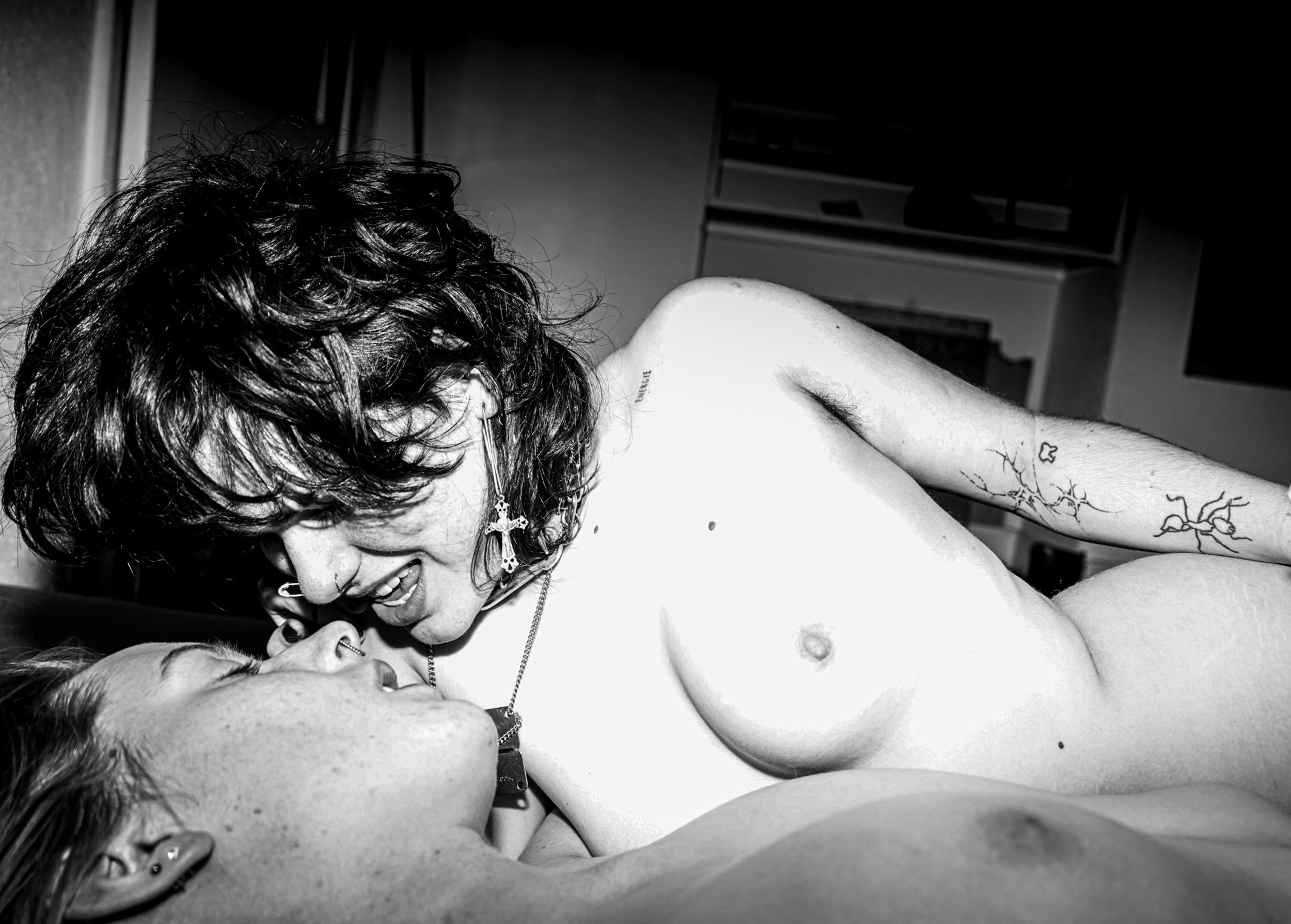
Photographed with raw proximity and trust, Strays offers rare, unguarded access to spaces that are often misunderstood or remain invisible. As the artist writes, the work moves through «the blurred lines between the private and the public; personal struggle and collective joy; the theatrical and the improvised».
Bedrooms become shrines, bodies become canvases of identity and resistance, and fleeting moments — a tattoo, a cigarette, a shared night swim — carry the weight of belonging.
These images are not about spectacle. They are about presence. About the fragile communities that form when the world outside offers few places to stand.
With Strays, Hara Ghan gives form to a generation searching — for autonomy, for connection, and for ways of living beyond the expectations meant to be inherited. It is a work of striking honesty and emotional clarity, and we are excited to recognise and celebrate the emergence of a distinctive new photographic voice.
About the photographer
Hara Ghan
Hara Ghan (b. 2002) is a photographer currently based in The Hague. Ghan is a fourth-year photography student at the Royal Academy of Art (KABK) and a second-year art history student.Ghan grew up in a small mountain village near Madrid with fewer than 800 inhabitants. At seventeen, after reading Albert Camus’ The Stranger, Ghan abandoned earlier plans to become a doctor and instead decided to pursue photography. Two weeks later, the first camera was purchased and the process of self-education began, studying the work of other photographers.Ghan’s practice is strongly influenced by literature, particularly writers such as Raymond Carver, whose attention to the poetic potential of everyday life informs the way narratives are constructed. Like the writers who shaped this thinking, Ghan approaches photography as a way of working directly from lived experience — an expressive necessity that arises from it.